











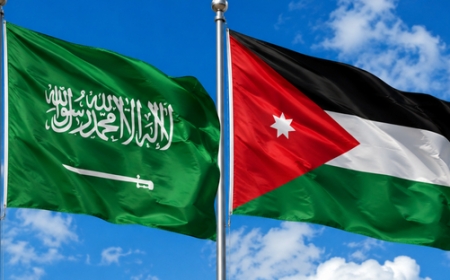

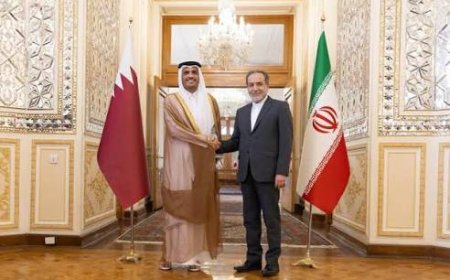













8 Nations, Including Qatar & Saudi Arabia, Join Trump's 'Board of Peace' for Gaza
Qatar, Saudi Arabia, Turkey, UAE, and four other nations have agreed to join the US-led 'Board of Peace' to secure a Gaza ceasefire and oversee reconstruction.

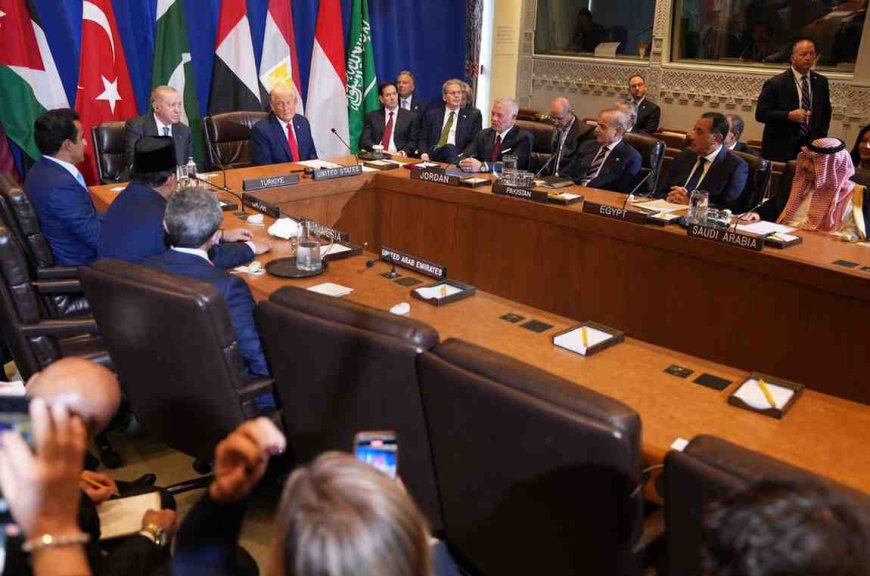
Eight Nations Including Qatar and Saudi Arabia Agree to Join Trump’s “Board of Peace” to Address Gaza Conflict
In a major diplomatic development, a coalition of eight influential nations—Qatar, Saudi Arabia, Turkey, Egypt, Jordan, Indonesia, Pakistan, and the United Arab Emirates (UAE)—has agreed to join U.S. President Donald J. Trump’s newly proposed “Board of Peace.” The initiative aims to secure a lasting Gaza ceasefire and oversee the territory's massive reconstruction, marking a significant step in international peace efforts.
A Collective Commitment to Peace
The foreign ministers of the eight nations issued a joint statement accepting President Trump's invitation. They emphasized their commitment to implementing the board's mission "as a transitional administration," in line with the peace plan endorsed by UN Security Council Resolution 2803. Each country will now complete its internal legal procedures to formalize membership.
Core Objectives of the Board
The coalition outlined the board's primary goals:
-
Consolidating a permanent ceasefire in Gaza.
-
Supporting large-scale reconstruction of the devastated territory.
-
Advancing a just and lasting peace based on Palestinian rights to self-determination and statehood, in accordance with international law.
Strategic Weight of the Member Nations
The participation of these specific countries provides the initiative with substantial diplomatic and regional credibility:
-
Saudi Arabia & Qatar: Bring immense political and financial influence within the Arab and Muslim world.
-
Turkey & Egypt: Offer critical diplomatic experience and have been key mediators in past Israel-Palestine negotiations.
-
Jordan: A direct stakeholder as a neighbor to the West Bank with a large Palestinian population.
-
Indonesia & Pakistan: Represent significant global Muslim populations and longstanding advocacy for Palestinian rights.
-
UAE: Continues its role as an active diplomatic interlocutor in the region.
International Context and Reactions
The Board of Peace has garnered a mixed global response. While these eight nations have joined, several European countries like France and Norway have declined invitations. The initiative is seen by supporters as a pragmatic, action-oriented alternative to slower UN processes. Critics, however, caution that it must work in tandem with established international bodies and secure the cooperation of all on-ground parties, including Israel, Hamas, and the Palestinian Authority, to be effective.
Also Read: Saudi Arabia's $1.2 Billion Bet on AI: Infra & Humain Seal Major Deal at Davos 2026
The Path Forward
As the member nations finalize their accession, focus will shift to the board's operationalization. Its success will be measured by its ability to:
-
Translate diplomatic pledges into tangible humanitarian aid and reconstruction.
-
Facilitate inclusive political dialogue.
-
Build consensus among diverse international and regional stakeholders.
This coalition represents one of the most substantial diplomatic mobilizations for Gaza in recent years, placing key Muslim-majority nations at the forefront of a U.S.-led effort to chart a path out of one of the world's most protracted conflicts.