






















The New Saudi Doctrine: How Strategic Pragmatism Is Redefining Middle East Power Politics
Explore Saudi Arabia's shift to a pragmatic, multi-vector foreign policy. Learn how Riyadh is balancing global powers, hedging risks, and aligning diplomacy with Vision 2030 for strategic autonomy.

The New Saudi Doctrine: Pragmatism and Multi-Alignment Reshape Middle East Diplomacy
In an era of global uncertainty, Saudi Arabia's foreign policy has undergone a profound transformation, emerging as a compelling case study in pragmatic, interest-driven statecraft. Moving beyond traditional alliances, the Kingdom is pioneering a model of strategic independence that many nations are watching closely. At the core of this shift is a principle of diversification—applying the same logic used in its economic strategy to its diplomatic playbook to avoid over-reliance on any single partner.
This recalibration mirrors the Kingdom’s approach to energy markets. Just as it works within OPEC+ to unilaterally calibrate oil production and ensure market stability, its diplomatic strategy now actively balances multiple global relationships instead of anchoring itself exclusively to one superpower or bloc. This move towards multi-alignment is the defining feature of Riyadh’s new geopolitical posture.
The Mechanics of Multi-Vector Diplomacy
Saudi Arabia’s pragmatic diplomacy is evident across several fronts. While maintaining its long-standing partnership with Western powers, the Kingdom has simultaneously:
-
Advanced strategic ties with emerging powers like China and Russia.
-
Diversified its security and defense procurement.
-
Positioned itself as a key mediator in regional conflicts, from talks with Iran to diplomacy in Sudan.
This hedging strategy acknowledges the reality of a shifting global order. By refusing to "put all its eggs in one basket," Riyadh retains crucial flexibility, ensuring it is not left exposed by the rise and fall of any single power center.
Strategic Autonomy and Risk Management
A key advantage of this approach is enhanced risk management. By avoiding deep entanglements in a single alliance, Saudi Arabia insulates itself from the fallout of geopolitical disputes that do not directly serve its national interest. This fosters strategic autonomy—the freedom to act unilaterally when necessary, whether in oil markets or regional diplomacy, without waiting for multilateral consensus.
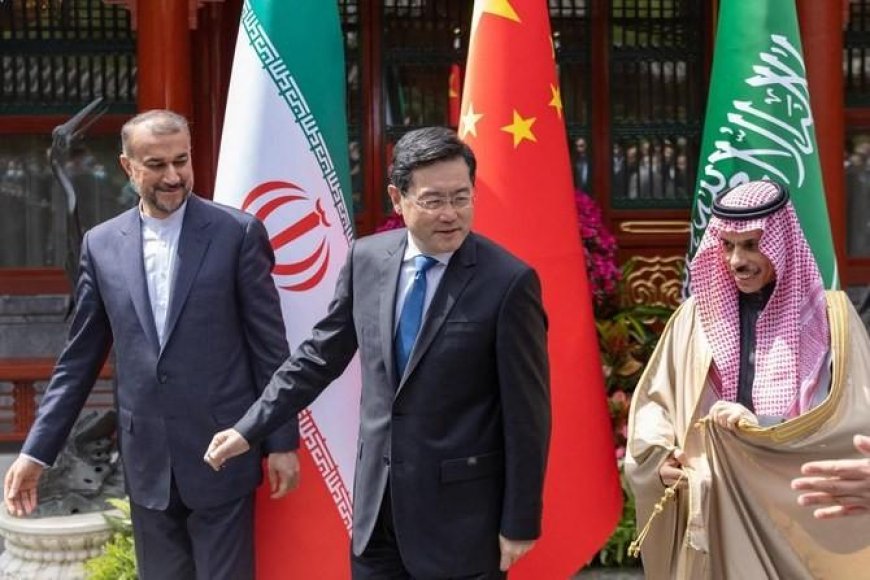
This independence was vividly demonstrated with the landmark China-brokered diplomatic rapprochement with Iran in 2023. The move signaled Riyadh's capacity to pursue its own security priorities through non-traditional channels, a clear departure from past precedents.
Linking Diplomacy to Domestic Transformation
Crucially, this external posture is tightly aligned with domestic ambitions. Saudi foreign policy is now a direct instrument of Saudi Vision 2030, the ambitious plan to diversify the economy away from oil. Diplomacy is leveraged to attract foreign investment, secure technology transfers, and build partnerships that fuel projects like NEOM and the green initiative.
The result is a coherent national strategy where external engagements directly support internal transformation, moving beyond ideological goals to deliver tangible economic and social benefits.
Also Read: Saudi Arabia's Game-Changing Instant E-Visa: Your Guide to Faster, Easier Travel
Lessons and Challenges of the Saudi Model
For other states, the Saudi model offers clear lessons. It demonstrates that realism in foreign policy is not cynicism, but a clear-eyed alignment of action with national interest. It proves that diversifying partnerships is a prudent hedge against global uncertainty.
However, this path is not without its challenges. Balancing competing relationships can create tensions, where closer ties with one power may strain relations with another. Unilateral actions, while affirming autonomy, can raise concerns among traditional partners. Furthermore, a focus on pure pragmatism can attract criticism for a perceived lack of normative ambition.
Conclusion: A Playbook for a Multipolar World
In summary, Saudi Arabia’s foreign-policy realism is built on a simple but powerful framework: expand options, retain autonomy, align external strategy with internal goals, and act decisively when required.
As global power becomes more diffuse, Riyadh’s pragmatic diplomacy offers a resilient and relevant playbook. It underscores that in today’s world, success is less about rigid ideological blocs and more about flexible, interest-based engagement. For nations navigating this new era of strategic flux, the Saudi doctrine of calculated independence provides a powerful blueprint for thriving in a multipolar century.