














Trump to Attend Saudi-Backed FII Summit in Miami, Deepening U.S.-Gulf Economic Ties
President Trump expected at Future Investment Initiative in Miami, March 26-29, 2026. Will join PIF Governor Al-Rumayyan as Saudi Arabia pursues $1 trillion U.S. investment pledge amid Vision 2030.

Trump to Attend Saudi-Backed Investment Summit in Miami, Signalling Deepening U.S.–Gulf Economic Ties
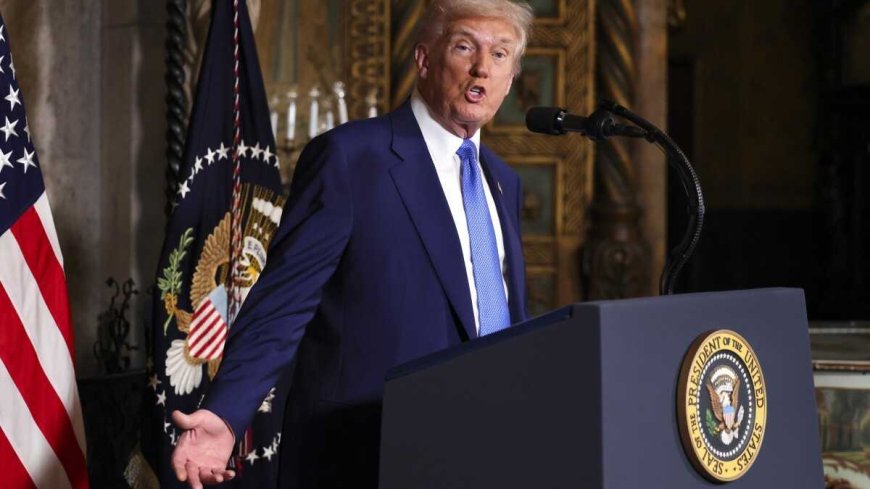
Washington D.C./Miami — U.S. President Donald Trump is expected to attend the Future Investment Initiative (FII) conference in Miami this March, marking his second consecutive participation in the Saudi-backed global investment summit since returning to the White House and underscoring the administration's focus on deepening economic engagement with Gulf partners .
The conference, scheduled for March 26–29, 2026, will convene government officials, business leaders, and investors from around the world. Trump's anticipated presence—and his expected attendance at an opening-night dinner hosted by Yasir Al-Rumayyan, Governor of Saudi Arabia's Public Investment Fund (PIF) —signals the strategic priority attached to U.S.–Gulf economic ties .
What the FII Conference Is All About
Founded and heavily supported by the Saudi government, the FII Institute organizes the Future Investment Initiative, an annual gathering often described as "Davos in the Desert" for its ambition to mirror the World Economic Forum's global influence .
While the flagship event remains in Riyadh, the Miami edition reflects Saudi Arabia's strategy to:
-
Broaden geographic reach into North and South American markets
-
Attract Western institutional investors essential for Vision 2030 funding
-
Showcase investment opportunities across technology, infrastructure, energy, and finance
-
Counter regional competition, particularly from UAE financial hubs
The conference serves multiple goals for Saudi policymakers. It provides a high-level platform to showcase domestic and international investment prospects as the kingdom seeks greater private sector funding for its economic diversification agenda .
Funding shortfalls in some major Vision 2030 projects have prompted Saudi leaders to place even greater emphasis on foreign capital and strategic partnerships. By hosting an FII event in Miami, Riyadh hopes to solidify economic linkages with the U.S. market, where Saudi investments—particularly through the PIF—already play a significant role across numerous sectors .
Trump's Participation and U.S.–Saudi Economic Relations
Trump's expected attendance signals a deliberate deepening of economic diplomacy between the United States and Saudi Arabia .
During Crown Prince Mohammed bin Salman's Washington visit in November 2025, both nations finalized a series of investment and defense agreements. Most notably, Riyadh pledged to expand its investment footprint in the United States to $1 trillion—a dramatic escalation from earlier commitments of approximately $600 billion .
These agreements are part of broader efforts by Gulf governments to channel capital into:
-
U.S. infrastructure development and modernization
-
Technology partnerships spanning AI, fintech, and clean energy
-
Defense sector collaboration and procurement
-
Healthcare and biotechnology innovation
Such cooperation aligns with U.S. strategic interests in maintaining robust bilateral ties amid a shifting global landscape where regional influence, energy security, and economic resilience remain key priorities .
Competing Gulf Ambitions
Trump's FII attendance comes amid intensified economic competition between Gulf neighbors, particularly Saudi Arabia and the United Arab Emirates .
Both nations are vying to:
-
Attract international capital and talent
-
Assert dominance as regional financial hubs
-
Host rival investment forums and initiatives
-
Secure corporate headquarters relocations
The competition extends beyond rhetoric to tangible outcomes: fund manager mandates, sovereign investment flows, and the loyalty of global institutional investors .
Trump's presence at FII Miami implicitly endorses Saudi Arabia's convening power and economic vision—a significant soft power advantage for Riyadh in its rivalry with Abu Dhabi and Dubai .
Broader Implications for Global Investment
The Miami FII conference is expected to draw not only political leaders but major corporate executives and investment decision-makers, offering Saudi Arabia a prime opportunity to pitch long-term prospects across:
-
Renewable energy and sustainability initiatives
-
Artificial intelligence and digital transformation
-
Tourism development and hospitality
-
Logistics and supply chain infrastructure
-
Healthcare and biotechnology
Saudi Arabia's PIF has built an extensive global portfolio—including significant U.S. investments—as part of its strategy to diversify away from an oil-dependent economy. This approach mirrors broader Gulf efforts to leverage sovereign capital to enter new markets and drive economic transformation .
Scrutiny and Criticism
Despite these ambitions, the FII has drawn scrutiny from international observers.
Human rights groups, including Human Rights Watch, have criticized Saudi Arabia's use of high-profile investment events to polish its global image, arguing that issues like press freedom and civil liberties often go unaddressed at such forums .
A recent report noted that past FII gatherings have lacked transparent discussions on human rights, even as Saudi funds expand their global investment footprint. Critics contend that the kingdom's economic opening has not been matched by corresponding political reforms .
These concerns may surface during the Miami conference, though organizers typically structure events to emphasize business opportunities rather than contentious political discussions .
What's at Stake in Miami
For the United States, closer economic ties with Gulf sovereign funds and private investors support multiple policy goals:
-
Stimulating domestic investment flows into strategic sectors
-
Fostering innovation partnerships between American and Gulf companies
-
Securing commitments that help balance global economic competition
-
Creating American jobs through foreign direct investment
The presence of a sitting U.S. president at FII sends a clear signal of Washington's willingness to embrace these partnerships. It amplifies the message that strategic economic cooperation—particularly with Gulf states—remains a key component of U.S. foreign and economic policy in 2026 .
What to Watch
As the March conference approaches, observers will track:
-
Investment announcements: Will new PIF commitments or U.S.–Saudi joint ventures emerge?
-
Trump's messaging: How will the president frame Gulf economic engagement?
-
Corporate participation: Which American CEOs attend, and what does their presence signal?
-
Regional dynamics: How will UAE and other Gulf competitors respond?
-
Critic responses: Will human rights concerns gain traction amid investment enthusiasm?
Conclusion: A Summit Worth Watching
The convergence of America's president, Saudi Arabia's sovereign wealth fund governor, and thousands of global investors in Miami this March represents economic diplomacy at its highest level .
For Trump, FII offers a platform to showcase his administration's ability to attract foreign capital and strengthen strategic partnerships. For Saudi Arabia, it provides visibility for Vision 2030's next phase and access to Western investors essential for funding ambitious projects. For the broader U.S.–Gulf relationship, it reinforces the mutual economic interests underpinning a complex, often contentious, but ultimately indispensable partnership .
Whether Trump's attendance yields billion-dollar announcements, strategic breakthroughs, or simply diplomatic atmospherics will depend on what happens in Miami's conference halls and private dinners.
But one thing is certain: when the President of the United States sits down with the steward of nearly a trillion dollars in Gulf capital, the world pays attention.