




























Medical Miracle: Saudi Doctors Perform Robotic Surgery on Toddler with Rare Intestinal Disorder
King Faisal Specialist Hospital in Jeddah successfully performed robotic-assisted surgery on a 2-year-old with Hirschsprung’s disease, marking a breakthrough in pediatric healthcare.

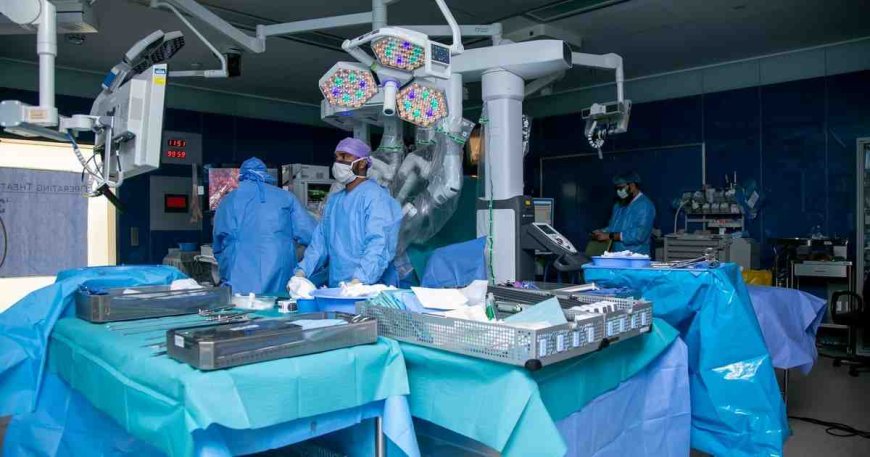
Saudi Hospital Uses Robotic Surgery to Treat Rare Intestinal Condition in 2-Year-Old Child
In a significant medical milestone, doctors in Saudi Arabia have successfully used robotic technology to perform a highly complex surgery on a young child suffering from a rare intestinal condition. The achievement marks a major step forward in the use of advanced robotics in pediatric healthcare, where precision and safety are especially critical.
The procedure was carried out at the King Faisal Specialist Hospital and Research Centre (KFSHRC) in Jeddah, where a two-year-old child weighing around 10 kilograms was treated for Hirschsprung’s disease. This rare congenital disorder affects the large intestine, preventing normal bowel movements due to the absence of essential nerve cells in parts of the colon.
Hirschsprung’s disease can lead to severe constipation and, in serious cases, life-threatening intestinal blockages. Early surgical intervention is often necessary to remove the affected portion of the intestine and restore normal function. Without timely treatment, the condition can cause serious complications, including bowel obstruction and malnutrition.
To address the condition, doctors performed a specialised operation known as the “Soave pull-through” procedure. This involves removing the dysfunctional segment of the colon and connecting the healthy portion to allow the digestive system to work properly again. The procedure requires extreme precision, particularly in young children where anatomical structures are tiny and delicate.
What makes this case particularly noteworthy is the use of robotic assistance during surgery—an approach that is still relatively rare in pediatric procedures. Operating on very young children presents unique challenges due to their small anatomical structures. The pelvic area, where such surgeries are performed, is extremely confined, with vital nerves, muscles, and blood vessels located very close to one another.
In this scenario, robotic technology played a crucial role in enhancing the surgeons’ capabilities. The system provided a magnified, high-definition view of the surgical area and enabled precise, controlled movements that are difficult to achieve with traditional techniques. This helped reduce the risk of damage to surrounding tissues and improved overall surgical accuracy, which is critical for preserving bowel function and continence.
Medical experts highlight that such precision is vital in pediatric surgeries, where even minor errors can have long-term consequences on a child’s health and development. The robotic system allowed surgeons to navigate the delicate anatomy more effectively, ensuring better outcomes for the patient. The child is reported to be recovering well following the procedure.
The success of this operation reflects a broader trend in global healthcare, where advanced technologies such as robotics are increasingly being integrated into complex medical procedures. In recent years, robotic-assisted surgeries have gained popularity for their ability to minimise invasiveness, reduce recovery time, and improve patient safety across a range of specialties including urology, gynecology, and oncology.
The hospital stated that this achievement aligns with its commitment to adopting cutting-edge medical technologies to enhance patient care. KFSHRC has earned international recognition for its innovation and excellence, consistently ranking among the top healthcare institutions in the region and globally. The hospital is known for its specialized pediatric services and pioneering surgical techniques.
Experts believe that the use of robotics in pediatric surgery will continue to expand in the coming years. As technology advances, it is expected to play a larger role in treating complex conditions that were previously considered high-risk, particularly in children. Miniaturization of robotic instruments and improved imaging systems are likely to make such procedures even more accessible.
While robotic systems do not replace surgeons, they act as highly advanced tools that enhance human skill and precision. The successful treatment of this young patient demonstrates how the combination of medical expertise and technology can lead to better health outcomes. The surgical team underwent extensive training to master the robotic system before performing the procedure.
This breakthrough not only highlights Saudi Arabia’s growing capabilities in advanced healthcare but also offers hope for patients suffering from rare and challenging conditions worldwide. It underscores the potential of robotic-assisted surgery to transform the future of medicine, especially in delicate and high-stakes cases involving children. As robotic technology continues to evolve, more young patients may benefit from safer, more precise surgical interventions.