


























Sandstorm Hits Riyadh; Rain, Storms Forecast Nationwide
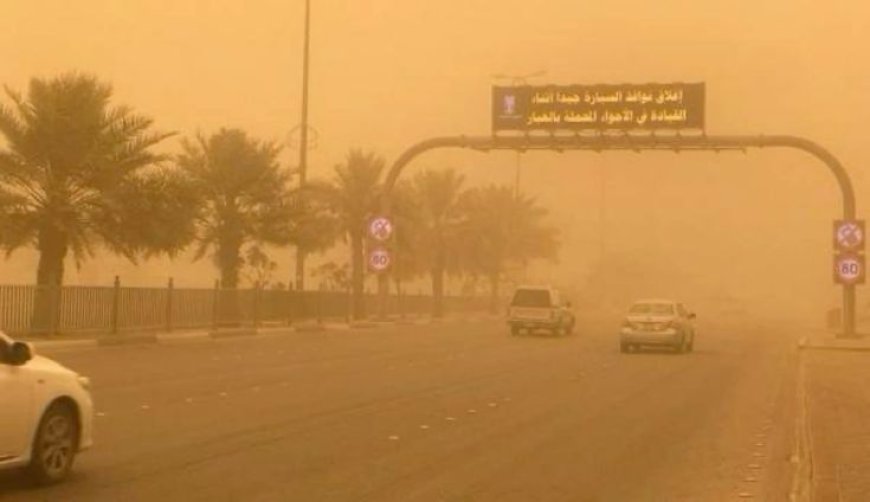
A dense sandstorm cut visibility across Riyadh on Friday as authorities warned of dust, strong winds and heavy rain in several Saudi regions over the weekend.

Sandstorm Blankets Riyadh as Kingdom Braces for Rain and Thunderstorms This Weekend
A dense layer of airborne sand settled over the Riyadh skyline on Friday, cutting visibility across the capital and its surrounding areas as strong winds whipped dust across major roadways. The dramatic shift in conditions prompted an official weather warning and a fresh round of safety advisories from Saudi authorities, even as forecasters pointed to a very different set of weather risks heavy rain and thunderstorms building in other parts of the Kingdom.
Near-zero visibility prompts road safety warnings
Saudi Arabia's National Center for Meteorology, known as the NCM, issued a forecast warning that the greater Riyadh region would be affected by dust, gusting winds and, at times, near-zero horizontal visibility throughout the day on Friday. The warning was borne out on the ground, with commuters across the capital reporting hazy, sand-choked conditions that made driving considerably more difficult than usual.
In response, Saudi Highway Security and the country's broader road safety authority urged motorists to exercise extra caution while navigating the reduced visibility, a standard but important precaution during major dust events, when the risk of multi-vehicle collisions on the Kingdom's highways rises sharply.
The General Directorate of Civil Defense went a step further, specifically advising residents to steer clear of sandy or open desert locations over the weekend in order to avoid accidents linked to the ongoing sandstorm. The directorate also issued a broader call for the public to remain alert and to follow official guidance as weather conditions continue to evolve across different parts of the country.
A country of contrasts: dust in the centre, rain in the south
What makes this particular weather system notable is the sheer contrast in conditions playing out simultaneously across different regions of the Kingdom. While Riyadh grappled with reduced visibility and blowing sand, the NCM's forecast pointed to a markedly different picture unfolding elsewhere.
According to the forecast, moderate to heavy rain accompanied by hail was expected to fall across parts of Jazan, Aseer, Al-Baha and Makkah — regions in the Kingdom's south and west that tend to see more significant precipitation during shifts in seasonal weather patterns. Meanwhile, lighter to moderate rainfall was forecast for parts of Najran, Riyadh and Madinah regions, suggesting that even the capital itself could see a mix of dust and rain activity as the system moves through.
Beyond Riyadh, widespread dust storms were also expected to affect several other regions, with the NCM specifically flagging dust-stirring winds across the Eastern Province, as well as the Qassim and Tabuk regions underscoring just how broad an area this particular weather system is covering.
Strong winds extend across the Kingdom's coastal waters
The disruptive weather pattern was not confined to land. Forecasters also flagged notably strong winds across both of the Kingdom's coastal waterways. Over the Red Sea, winds were expected to blow from the northwest to west at speeds ranging from 15 to 34 kilometres per hour in the northern section, strengthening to as much as 40 kilometres per hour in the central Red Sea. In the southern Red Sea, winds were forecast to shift to a southwesterly-to-southeasterly pattern, with speeds ranging more widely between 10 and 50 kilometres per hour.
Similarly elevated wind conditions were forecast for the Arabian Gulf, where northwesterly to northeasterly winds of 15 to 30 kilometres per hour were expected in the northern and central Gulf, easing slightly to 10 to 25 kilometres per hour further south. For vessels operating in either waterway, the combination of strong winds and reduced visibility from blowing dust represents an added layer of navigational risk over the coming days.
A seasonal reminder of the Kingdom's shifting weather patterns
Sandstorms of this scale are not unusual for Saudi Arabia during transitional periods between seasons, when shifting pressure systems can whip up loose desert sand across wide stretches of the interior. Even so, events like Friday's serve as a useful reminder for residents and visitors alike of the importance of staying informed through official weather channels, particularly during the weekend period when outdoor activity, travel and highway usage typically increase.
With both dust and rain risks in play across different parts of the country simultaneously, authorities are likely to keep safety advisories active through the weekend. Residents in affected regions are encouraged to monitor updates from the National Center for Meteorology and the General Directorate of Civil Defense as conditions continue to develop.
Next Article