




















Humain Preps IPO as Saudi AI Data Centre Race Continues
PIF-backed AI firm Humain is assembling a team to prepare a public listing as Saudi Arabia pushes forward with massive AI infrastructure plans despite regional turmoil.

Kingdom's AI Champion Moves Toward Public Markets
Saudi Arabia's flagship artificial intelligence company, Humain, is taking its first formal steps toward a stock market listing, according to people familiar with the company's plans. The Public Investment Fund-backed firm has begun assembling a team of advisers to lay the groundwork for an eventual initial public offering, a move that would mark one of the most closely watched technology listings to emerge from the Gulf region in recent years.
Humain's chief executive, Tareq Amin, has previously signalled an intention to list the company on stock exchanges in both Saudi Arabia and New York before the end of the decade. While no formal listing date has been confirmed, the early preparatory work suggests the company is positioning itself to tap global capital markets at a moment when demand for exposure to artificial intelligence infrastructure remains intense among institutional investors worldwide.
The push comes as Humain continues to expand rapidly. Launched a little over a year ago under the patronage of Crown Prince Mohammed bin Salman, the company has quickly become the centrepiece of Saudi Arabia's broader strategy to establish itself as a serious global player in artificial intelligence, alongside the United States and China.
Building the Physical Backbone of Saudi AI Ambitions
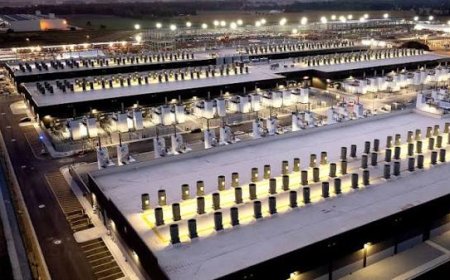
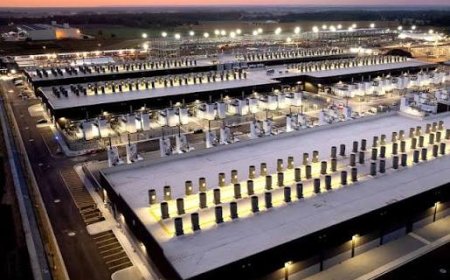
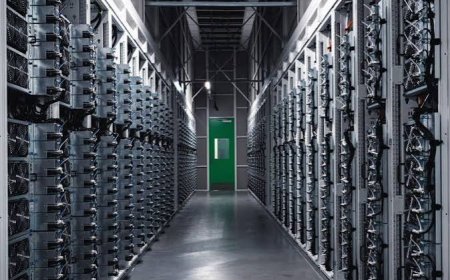
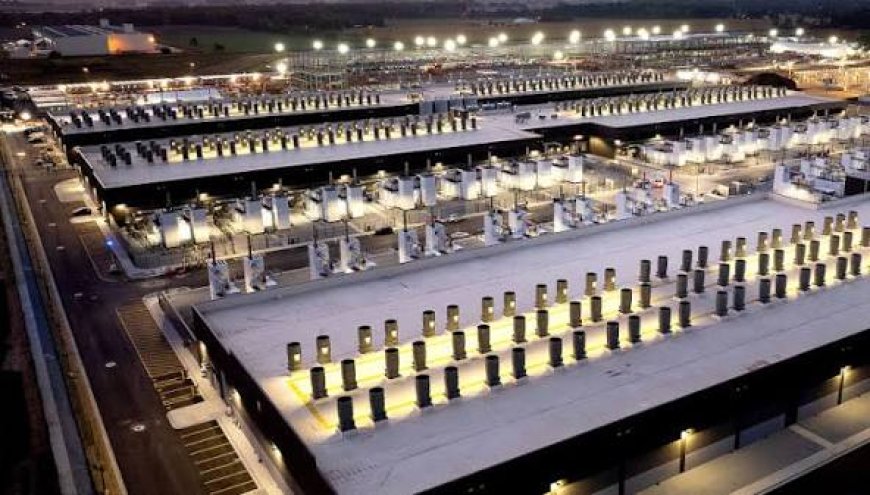
At the heart of Humain's strategy lies an enormous build-out of computing infrastructure. The company has been constructing large-scale data centre campuses designed to house tens of thousands of advanced processors, with plans to reach nearly two gigawatts of AI computing capacity within the kingdom by the end of the decade, and considerably more in the years beyond. That scale of investment would place Saudi Arabia among a small handful of countries capable of hosting frontier-level AI training and inference workloads domestically.
The company has diversified its hardware partnerships, working with major global chipmakers to secure a mix of processors suited to different workloads from intensive model training to lower-latency applications used in consumer and enterprise AI tools. It has also struck partnerships with several of the world's largest technology firms as it builds out cloud infrastructure, enterprise software, and its own large language model tailored to Arabic-language users.
Earlier this month, Humain unveiled an Arabic-focused AI model built on an open-source foundation developed by a Chinese AI laboratory, part of a broader effort to strengthen the Arabic AI ecosystem while diversifying the kingdom's technological partnerships beyond any single country. Company officials have described the initiative as central to ensuring the Arab world has genuine agency over how artificial intelligence is developed and deployed for its more than 400 million Arabic speakers.
Funding Ambitions Amid a Volatile Region
Bankrolling infrastructure at this scale requires enormous capital, and Humain has been exploring multiple avenues to secure it. Beyond the prospective IPO, the company has discussed plans for a multibillion-dollar global venture capital fund aimed at supporting AI-related businesses, with indications that the initiative could ultimately launch at an even larger scale than originally outlined.
Notably, the company's fundraising drive is unfolding against the backdrop of the wider regional conflict that has unsettled markets and complicated infrastructure planning across the Gulf. Despite the turbulence, Humain has told international investors that its data centre construction timeline remains broadly on track, a signal that Saudi authorities are determined to treat the AI build-out as a strategic priority insulated, as much as possible, from short-term geopolitical shocks.
The kingdom formally designated 2026 as its "Year of Artificial Intelligence," a branding exercise that reflects a much deeper policy commitment. Saudi Arabia has reported well over $100 billion in combined AI infrastructure commitments across public and private initiatives, and it became the first Arab nation to join a leading international body focused on setting global norms for responsible AI governance.
Why It Matters for the Region
For Saudi Arabia, Humain's trajectory is about more than one company's balance sheet. It is a proxy for the kingdom's broader Vision 2030 strategy of reducing dependence on oil revenues by building high-value, knowledge-based industries. A successful public listing would give Humain access to deeper pools of international capital, validate the kingdom's approach to sovereign AI development, and potentially set a template that other Gulf states with similar ambitions including the UAE's G42 may look to follow or compete against.
Investors and analysts will be watching closely for further details on timing, valuation expectations, and how the company plans to balance its stated global ambitions with its deep ties to the Saudi state. For now, the message from Riyadh is unambiguous: even amid regional uncertainty, the kingdom's bet on artificial intelligence as a pillar of its post-oil economy shows no sign of slowing down.