






















Oil Prices Jump on Saudi Energy Attack Fears
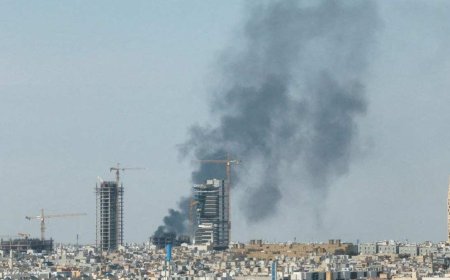
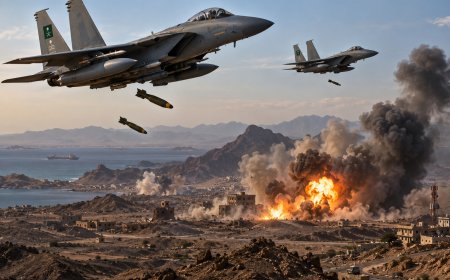
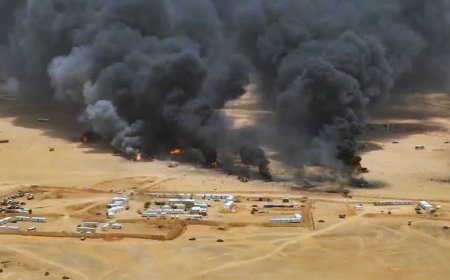
Crude prices climbed to their highest levels in weeks after Houthi attacks disrupted Saudi energy facilities, adding fresh strain to an already fragile global economic outlook.

Markets React to Renewed Gulf Tensions
Global energy markets moved quickly this week to price in fresh geopolitical risk after Houthi attacks disrupted operations at several Saudi energy facilities, pushing crude oil benchmarks to their highest levels in roughly six weeks. The spike reflects growing investor concern that the world's largest oil exporter could face further supply disruptions as its confrontation with Yemen's Iran-aligned rebel movement intensifies.
Saudi Arabia's outsized role in global energy markets means that even localized disruptions within the kingdom tend to have an outsized effect on international pricing. While the affected facilities represent only a portion of the kingdom's overall production and export capacity, the psychological impact on traders has been significant, particularly given that the attacks came amid an already fragile set of supply routes strained by nearly seven months of broader regional conflict.
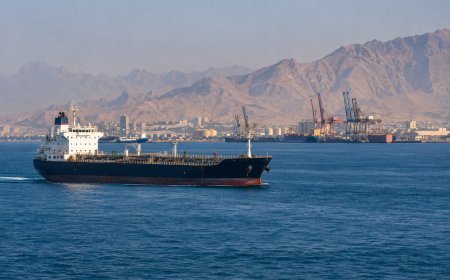
Energy analysts note that the timing compounds existing pressure on global supply chains. Shipping through the Strait of Hormuz, a critical corridor that historically carried roughly a fifth of the world's oil, has already been significantly curtailed by the wider Iran conflict, forcing exporters to lean more heavily on alternative routes, including pipeline capacity that bypasses the strait entirely.
A Fragile Economic Balancing Act for the Kingdom
For Saudi Arabia itself, the economic stakes of the ongoing confrontation are considerable. The International Monetary Fund has projected that the kingdom will lead regional economic growth this year, supported in part by its alternative export infrastructure, even as the broader Middle East and North Africa region faces a sharply lowered growth outlook due to the conflict's wider economic toll.
Saudi authorities have spent recent years working to diversify government revenue away from oil dependency under the kingdom's long-term economic transformation programme, but crude exports remain the single largest source of state income by a considerable margin. Elevated but volatile oil prices present a complicated picture for policymakers: higher prices can boost near-term export revenue, but sustained volatility and the threat of further attacks on infrastructure also raise insurance costs, complicate long-term investment planning, and unsettle the foreign capital that Riyadh has worked hard to attract for its diversification agenda.
The kingdom's fiscal deficit widened last year as government spending on infrastructure, social programmes and diversification projects continued at pace, and officials have signalled that deficits are likely to persist in the near term as those investments continue. A prolonged period of supply disruption or depressed investor confidence could complicate the calculus behind that spending, even as elevated oil prices provide some offsetting fiscal cushion.
Global Ripple Effects
The consequences of the standoff are not confined to Saudi Arabia. Economists tracking the broader regional conflict have outlined starkly different scenarios for how the global economy could evolve depending on how quickly energy production and exports from the Gulf recover. A scenario in which disruptions prove temporary would likely see global growth moderate through the remainder of the year before recovering in 2027. A more prolonged disruption, by contrast, could mean significantly weaker global growth and substantially higher inflation extending well into next year.
Countries with limited energy reserves and high import dependency are particularly exposed to sustained price volatility. Import-reliant economies across South and Southeast Asia, along with parts of Europe still adjusting supply chains in the wake of earlier shocks, are among those most likely to feel the knock-on effects of sustained Gulf instability through higher fuel costs and broader inflationary pressure.
Watching for the Next Move
For now, markets remain in a holding pattern, watching closely for signs of how both the security situation and Saudi production capacity evolve in the coming days. Should energy infrastructure damage prove more extensive than initially assessed, or should further attacks follow, analysts warn that price volatility could intensify further. Conversely, a swift de-escalation and confirmation that affected facilities have resumed full operations could see some of the recent price gains unwind.
What is clear is that the intersection of regional security and global energy markets remains as tightly coupled as ever. As Saudi Arabia continues to navigate both a live security challenge on its southern border and an ambitious economic transformation agenda, the coming weeks are likely to prove a critical test of the kingdom's ability to manage both simultaneously.