



























Kushner Meets Netanyahu After Rare Hamas Talks on Gaza Plan
US envoy Jared Kushner held rare talks with Hamas leader Khalil al-Hayya in Egypt before meeting Netanyahu, as regional powers press Israel over its rejected Gaza roadmap.

A Fragile Push to Revive a Stalled Peace Plan
Diplomatic efforts to salvage the future of Gaza intensified this week, as US President Donald Trump's envoy and son-in-law Jared Kushner held a rare, direct meeting with Hamas leadership before flying to Jerusalem for talks with Israeli Prime Minister Benjamin Netanyahu — a sequence of meetings underscoring just how precarious the current diplomatic moment has become.
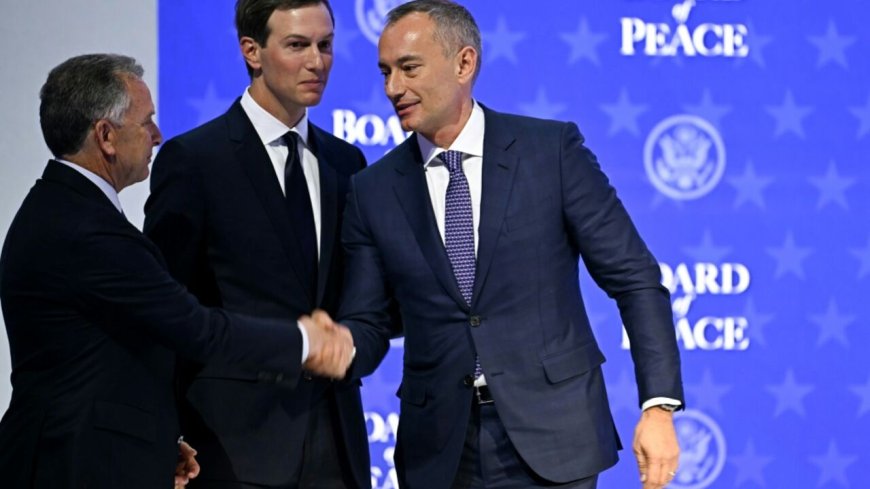
Kushner met Sunday with a Hamas delegation led by the group's chief, Khalil al-Hayya, during talks hosted in Egypt and attended by mediators including Trump's Board of Peace envoy for Gaza, Nickolay Mladenov. The meeting marks only the second known direct encounter between Kushner and Hamas representatives, following an earlier session alongside fellow envoy Steve Witkoff in October 2025 that helped secure the ceasefire and hostage release that ended major combat operations in Gaza.
Details from the Cairo-area talks, held in the coastal city of El Alamein, indicate Kushner pressed Hamas to take what one source described as "concrete, verifiable steps" toward disarmament, while relaying a message that Gaza "can never again be a source of terror for Israel." Hamas, for its part, reiterated its commitment to the broader plan, according to officials briefed on the discussions.
Netanyahu's Rejection Creates a Diplomatic Rift
The renewed diplomatic push comes against the backdrop of an unusually public rift between Washington and Jerusalem. Netanyahu formally rejected the latest 15-point, US-backed roadmap earlier this month, insisting that any final settlement must guarantee Hamas is "genuinely disarmed" before Israeli forces withdraw from the territory. The Israeli leader, whose governing coalition is currently trailing in opinion polls ahead of an October national election, has taken a notably harder public line than the one struck in earlier rounds of ceasefire diplomacy.
The plan itself envisions a phased Israeli withdrawal from Gaza tied to verified steps toward Hamas' disarmament, alongside the deployment of an international stabilization force working in tandem with a newly formed Palestinian police unit to secure the territory. Hamas has said it accepts the broader framework but insists implementation must depend on Israel first meeting its own obligations, including a genuine withdrawal and an end to ongoing strikes.
It is this fundamental disagreement over sequencing — who moves first, and under what guarantees — that has kept the roadmap in limbo for weeks, even as the underlying ceasefire that ended large-scale fighting continues to hold, however tenuously.
Regional Powers, Including Saudi Arabia, Press Israel
The diplomatic stalemate has not gone unanswered by the wider region. On Monday, Hamas welcomed a joint statement issued by the United Arab Emirates, Qatar, Jordan, Indonesia, Pakistan, Turkey, Saudi Arabia and Egypt, which condemned Israel's rejection of the roadmap and called for its implementation to proceed. The statement represents a rare coordinated diplomatic signal from a broad coalition of Muslim-majority states, several of which have played direct roles in ceasefire mediation over the past year.
Saudi Arabia's inclusion in the statement reflects the Kingdom's consistent position throughout the Gaza crisis: support for a negotiated end to the conflict that includes credible pathways toward Palestinian statehood, paired with firm opposition to any arrangement perceived as allowing indefinite Israeli military presence in the territory.
What Comes Next
Details of Monday's Kushner-Netanyahu meeting in Jerusalem were not immediately made public, though an Israeli government official confirmed the talks had concluded by mid-morning. Israeli officials have previously indicated that discussions with US mediators have focused on the most contentious elements of the roadmap: the mechanics of Hamas disarmament, the composition and mandate of any international security force, and the shape of a technocratic administration for Gaza that would exclude Hamas from governance.
For the roughly two million people still living amid the wreckage of Gaza, the stakes of these talks extend far beyond diplomatic optics. More than ten months since the ceasefire halted the most intense phase of fighting, reconstruction of the enclave remains largely stalled, with significant areas of the territory still under Israeli military control.
Whether this latest round of shuttle diplomacy — spanning Cairo, El Alamein and Jerusalem within a matter of days — can break the current deadlock remains uncertain. But the willingness of Trump's closest envoy to meet directly with Hamas leadership for only the second time signals how seriously Washington is treating the risk that the fragile ceasefire could unravel without a renewed diplomatic push. With regional powers now publicly pressing Israel to move forward, the coming weeks are likely to prove decisive for the future of the roadmap — and for Gaza itself.