





























UAE Salt, Sugar and Fat Limits: What Changes for Shoppers
The UAE will cap salt, sugar and fat in packaged foods in phases, with fines of up to Dh500,000. See what shoppers and firms need to know.

UAE Sets Limits on Salt, Sugar
and Fat in Packaged Foods,
With Fines of Up to Dh500,000
The UAE has approved a nationwide plan to cut the amount of salt, sugar and fat in packaged foods, setting legal ceilings that manufacturers and importers must meet in stages over the next four years.
The Ministry of Health and Prevention said the resolution, approved on Tuesday, covers packaged products whether they are made in the country or brought in from abroad. It also applies to the businesses that handle them, including companies based in free zones. The stated goal is to improve the nutritional quality of what reaches supermarket shelves and to help address obesity and other conditions linked to poor diets.
Products made or imported purely for export are excluded, unless they are also sold inside the UAE.
A staged timetable that ends in 2030
Instead of imposing one set of numbers overnight, the ministry has built the rules around two phases of limits. Every covered product must meet the final targets by 31 December 2030. The approach is meant to give food makers time to rework recipes and adjust production lines without sudden disruption.
Deadlines differ by product group. Companies dealing with the first group have up to nine months to reach the first-phase limits. Those handling the second group, which includes processed cheese, get up to two years and three months. Both must then keep reducing levels until they reach the 2030 figures.
Existing stock is protected for a while. Products made or placed on the UAE market before the new requirements take effect can stay on sale for up to a year, or until their expiry date, whichever comes first.
What the new limits look like
All caps are expressed per 100 grams, and salt is measured through sodium content.
Bread offers a clear example. For leavened bread, the first phase allows up to 444 milligrams of sodium, 6 grams of total sugars and 8.4 grams of total fat. The second phase tightens those numbers to 370 milligrams, 5 grams and 7 grams. Flatbread follows a similar path: sodium falls from 384 milligrams to 320, with the same sugar and fat targets as bread at each stage.
Sweetened drinks and dairy products are also in scope. Total sugars in sweetened milk drinks, including milk alternatives, must drop from 9.6 grams to 8 grams. For sweetened or flavoured yoghurt and laban, the ceiling moves from 12 grams to 10 grams.
Salty snacks face some of the most visible reductions. Sodium in salted crackers must come down from 696 milligrams to 580. Salted nuts and seeds fall from 336 to 280, pretzels from 912 to 760, and snacks made from potatoes, sweet potatoes, vegetables or grains from 564 to 470.
Processed cheese is covered as well. For spreadable cheese, the sodium limit falls from 864 milligrams to 720, while other processed cheeses move from 1.2 grams to 1 gram.
Penalties for companies that fall short
The resolution lays out a graduated set of sanctions. Offenders can receive a warning, an administrative fine of between Dh5,000 and Dh500,000, a closure of up to six months, or the cancellation of their licence or approval.
Federal and local health authorities, together with other agencies, will be responsible for enforcement. They must also supply the ministry with the data and information it needs to run the programme.
A route to an exception
There is a safety valve for businesses that would struggle. If meeting a first-phase limit means cutting a targeted ingredient by more than 20 per cent, a company can apply for an exception.
Applications must be submitted within 30 days of the resolution taking effect. They need to include technical information, the product's registered nutrition label and test results from an accredited laboratory. Companies must also commit to reducing the ingredient by at least 20 per cent during the first phase.
An approved exception only buys time. It does not remove the obligation to meet the final limits by the end of 2030.
Part of a wider health push
The measure follows a series of recent steps aimed at nudging diets in a healthier direction. In July, Abu Dhabi announced that supermarkets would stop displaying unhealthy foods in high-traffic areas of their stores. Also in July, Al Ain Farms said it was cutting sugar in some popular products, and doctors in the UAE warned about the health risks linked to ultra-processed foods.
What it means for shoppers and the food industry
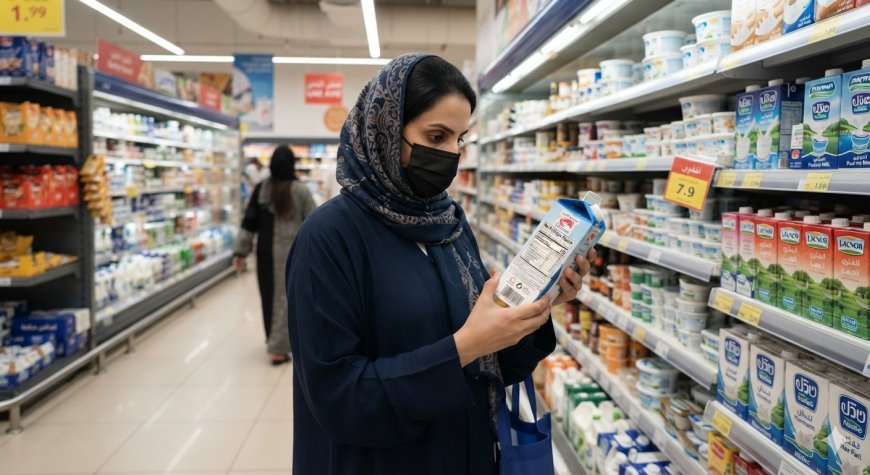
For consumers, the change will arrive quietly. Bread, yoghurt, crackers and cheese will look the same on the shelf, but recipes will shift gradually. People who read labels may notice lower sodium and sugar figures over the coming years.
For manufacturers, importers and retailers, the work begins immediately. Businesses will need to compare their product ranges with the new tables, test reformulations that keep taste and shelf life intact, and decide whether any lines justify an exception request. With fines reaching half a million dirhams and the threat of temporary closure, compliance planning is likely to become a priority for the sector.
The ministry has not framed the move as a ban on any ingredient. Rather, it sets a ceiling and a clear schedule, leaving companies to decide how to get there. How quickly shoppers see the results will depend on how fast the industry responds.