









Saudi Business Confidence Rises Ahead of Money20/20
Saudi Arabia's non-oil business confidence has climbed to its highest level since February, setting an upbeat tone ahead of the Money20/20 Middle East fintech summit in Riyadh.


Confidence Rebounds as Riyadh Prepares to Host Global Finance Leaders
Saudi Arabia's non-oil private sector is showing renewed optimism heading into the autumn, with a closely watched confidence gauge climbing to its strongest level since February. The improvement comes at a notable moment, just days before Riyadh opens its doors to thousands of financial technology executives, investors and policymakers for the Money20/20 Middle East conference.
The Kingdom's non-oil Business Confidence Index rose to 56.7 in August, according to the latest available data, marking a clear rebound from a sharp dip recorded back in March. Any reading above 50 signals that more businesses expect conditions to improve than worsen, and the latest figure suggests sentiment has recovered meaningfully after a rocky start to the year.
What's Behind the Improvement
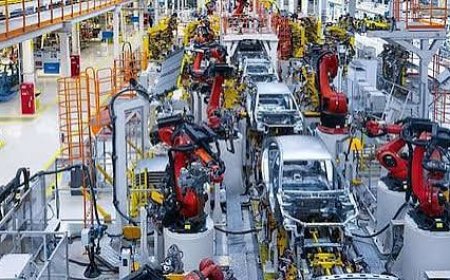
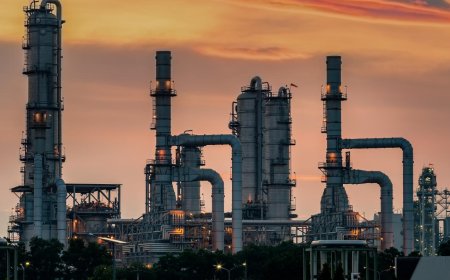
The rebound has been driven largely by stronger sentiment within the industrial and services sectors, which together make up a substantial share of non-oil economic activity in the Kingdom. Economists tracking the data describe the improvement as evidence of growing resilience in private-sector sentiment, even as regional security risks and softer global growth continue to weigh on the broader outlook.
That resilience matters more than it might have a year or two ago. As Saudi Arabia's Vision 2030 economic transformation agenda moves into a phase defined by large, capital-intensive projects spanning artificial intelligence, tourism, infrastructure, industrial development and urban expansion, maintaining steady private-sector confidence has become an important signal for both domestic businesses and the international investors the Kingdom is trying to attract.
Money20/20 Arrives at a Pivotal Moment
The timing of the confidence data lines up closely with Riyadh's preparations to host Money20/20 Middle East, a major fintech and financial services gathering scheduled for later this month. The event has grown into one of the region's most significant platforms for showcasing the Gulf's evolving financial technology sector, drawing major global players in banking, payments and digital finance.
For Saudi officials, the conference offers a timely opportunity to present the Kingdom's broader economic model to an international audience: a mix of stronger domestic confidence, efforts to shield the economy from external shocks, and a deliberate push to deepen access to private capital rather than relying solely on state and sovereign wealth funding.
Shifting the Weight Away From Sovereign Capital
A central theme shaping Saudi Arabia's current economic strategy is the effort to reduce how heavily the country's most ambitious projects depend on sovereign capital alone. Officials have increasingly framed the challenge facing Vision 2030 not simply as one of funding availability, but of funding composition in other words, finding ways to multiply the impact of state capital by drawing in greater volumes of private and international investment alongside it.
That shift reflects a broader recalibration happening across the Gulf, as governments that spent the past decade building out flagship megaprojects now focus on ensuring those investments can be sustained without placing excessive strain on public finances. The extent to which Saudi Arabia succeeds in "crowding in" private capital, rather than continuing to serve as the primary source of project funding itself, is increasingly seen by analysts as one of the clearest tests of Vision 2030's long-term viability.
A Broader Pattern of Economic Resilience
The improved confidence reading also fits into a wider narrative Saudi officials have sought to build around the Kingdom's economic trajectory: one of steady progress and diversification, even amid a challenging regional security backdrop. With non-oil sectors increasingly positioned as the primary engine of growth, sustained improvements in business sentiment carry real weight for policymakers trying to demonstrate that the transformation agenda is delivering tangible results, not just headline announcements.
Looking Ahead
As Money20/20 Middle East opens in Riyadh, attention will likely turn to how effectively Saudi officials and business leaders can translate improved sentiment and diversification progress into concrete new investment commitments. With global capital increasingly selective about where it deploys funds amid regional uncertainty, the coming days may offer an early indicator of how much international appetite remains for Saudi Arabia's next phase of economic transformation.
For now, the rise in business confidence gives Riyadh a genuinely positive story to tell as the spotlight turns toward the Kingdom's growing role in global finance and technology.