


















UN's New Session Opens Amid Calls for Reform
The UN General Assembly opened its 81st session with outgoing and incoming leaders warning the body must reform or face erosion amid wars, climate chaos and AI risks.

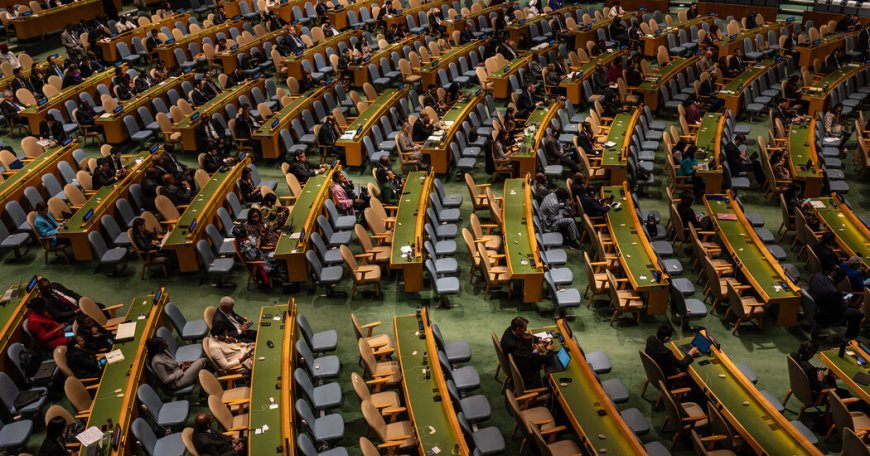
United Nations Marks New Chapter With Sober Warnings on Its Own Future
The United Nations closed the books on its 80th General Assembly session and gaveled open its 81st in a single day of ceremony this week, an occasion that carried far more weight than its usual procedural formality. Outgoing and incoming leadership used the moment to deliver a blunt message: the institution must reform itself or risk fading into irrelevance at precisely the moment the world needs it most.
Secretary-General Antonio Guterres set the tone with a sweeping assessment of the challenges confronting the body, pointing to wars that risk spiraling into nuclear escalation, deepening climate disruption, the rapid and largely unchecked advance of artificial intelligence, and rising human suffering compounded by cuts to humanitarian aid. He described rebuilding trust in the multilateral system as the defining challenge of this era.
Baerbock Defends the UN's Relevance
Outgoing General Assembly President Annalena Baerbock, who steered the body through its 80th session, pushed back firmly against suggestions that the UN has become a toothless or outdated institution. She told delegates that not a single day, and not a single country, would be better off without the United Nations, framing the past year's work as evidence of the body's continued value even amid gridlock.
Baerbock characterized the outgoing session as one that reached a genuine crossroads, testing whether a small number of powerful states could effectively hold a veto over the General Assembly's broader consensus. She said member states answered that challenge by refusing to let compromise become compromise for its own sake, pushing through 317 resolutions and holding 116 plenary meetings over the course of the year, including the opening of a new chapter on global AI governance. She acknowledged, however, that this progress came even as many other processes failed to reach full consensus, describing the reform agenda as unfinished business she is now handing to her successor.
A New President Takes the Gavel
Khalilur Rahman of Bangladesh formally assumed the presidency of the 81st session, elected in June after a rare contested secret-ballot vote in which he defeated Cyprus's Andreas Kakouris by a narrow margin of 99 votes to 91. His stated theme for the year, "Restoring Trust, Managing Transformation: A United Nations That Delivers for All," signals an agenda built squarely around institutional reform and rebuilding confidence in multilateral bodies at a time when several major powers have openly questioned the UN's continued relevance.
Guterres welcomed Rahman's incoming tenure while noting it begins against an unusually difficult backdrop: active conflicts, deepening geopolitical divisions, the risk of nuclear escalation, persistent poverty and inequality, and worsening climate disruption. He also flagged the looming selection of the next UN Secretary-General, whose term is set to begin in January 2027, as a process likely to dominate discussions in the months ahead.
Conflict Levels at a Historic High
Adding weight to the reform warnings, the assembly's presiding officer noted that active state-based conflicts have reached their highest level since 1946, a striking benchmark that underscores just how strained the current international order has become. That backdrop lends urgency to calls for structural changes within the UN system aimed at addressing modern security challenges that the organization's founding architecture was never designed to handle.
What Comes Next
The formal opening is only the beginning of a packed calendar. General Debate, when heads of state and government take the podium in New York, begins later this month, alongside a series of high-level meetings covering climate action, sea-level rise, pandemic preparedness and nuclear disarmament. For a region like the Gulf, where climate resilience, energy transition and multilateral cooperation remain central policy priorities, the coming weeks of UN deliberation are likely to carry direct relevance well beyond New York's East River headquarters.
Whether this year's warnings translate into meaningful structural change, or simply mark another chapter in a long-running debate about UN reform, is likely to become clearer as the session's most consequential meetings unfold in the weeks ahead.