


















Iran's President Urges End to War With US, Israel
Iranian President Masoud Pezeshkian says it's time to end the Middle East war with the US, claiming Tehran holds the stronger position as Washington ramps up pressure.

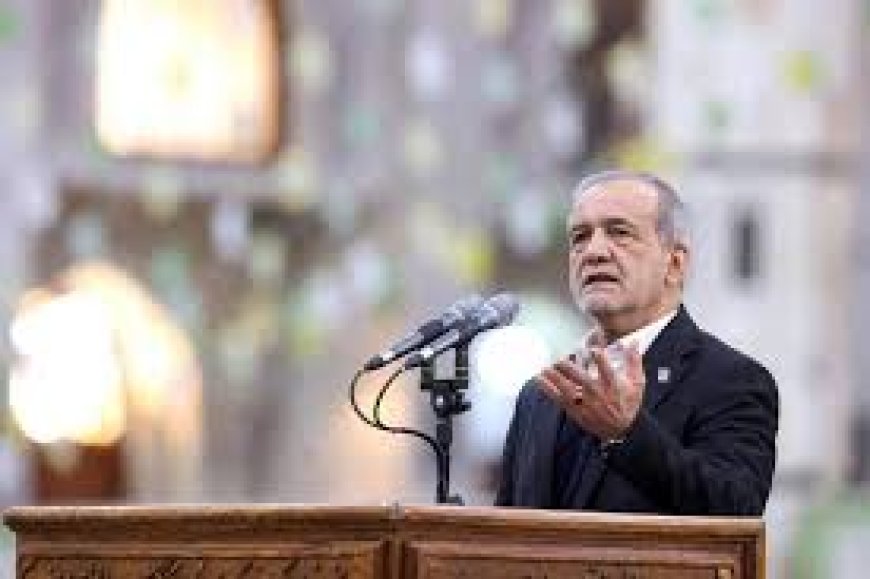
Pezeshkian Signals Readiness to Wind Down the Conflict
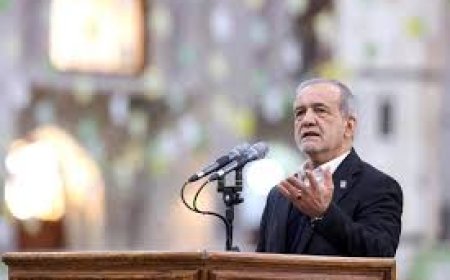
Iranian President Masoud Pezeshkian said on Friday that it was time to bring the months-long war with the United States to a close, arguing that Tehran is negotiating from a position of strength rather than weakness. Speaking to a gathering of doctors in Tehran, Pezeshkian framed an end to the conflict as a matter of national dignity rather than concession, insisting that Iran's standing had been strengthened rather than diminished by the confrontation.
The remarks mark one of the clearest public statements yet from Iran's president in his ongoing effort to counter hardline voices within the country's political establishment who favor continuing the fight rather than pursuing a negotiated settlement. Notably, the comments were delivered to a domestic Iranian audience rather than aimed at Washington or international media, suggesting the president is working as much to shift opinion at home as to send signals abroad.
A Stalemate With No Clear End in Sight
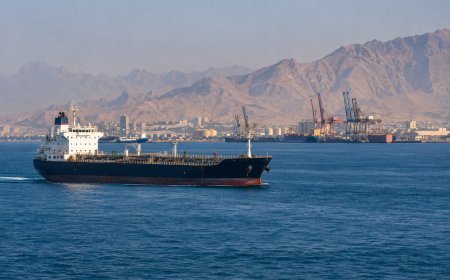
The war, which began in February after military action from the United States and Israel, has settled into a prolonged standoff in recent months. Tehran has kept the strategically vital Strait of Hormuz partially closed, disrupting a critical corridor for global oil and gas shipments, while Washington has maintained a naval counter-blockade aimed at squeezing Iran's ability to move military and commercial traffic. Neither side has managed to break the deadlock, and talks between the two longtime adversaries remain stalled.
Pezeshkian also used his remarks to defend a memorandum of understanding reached with Washington in June that was intended to pave the way toward ending the war, pushing back against domestic critics who have characterized the agreement as a capitulation. He argued that the deal reflected Iran's negotiating strength rather than any acknowledgment of defeat.
Washington Signals a Shift Toward Economic Pressure
The comments came a day after US Treasury Secretary Scott Bessent vowed that Washington would move to collapse the Iranian government through an intensified campaign of economic pressure, nearly six months into a war that has proven deeply unpopular within the United States itself. The remarks underline a broader shift in strategy from the Trump administration, which appears to be leaning more heavily on sanctions and financial measures rather than sustained military escalation as the conflict drags on without a decisive resolution on the battlefield.
China, which has significant energy and trade ties with Iran, criticized the American approach, arguing that further sanctions and pressure would not resolve the underlying conflict in the Middle East. The comments add Beijing to the list of major powers voicing skepticism about Washington's strategy, even as the US signals no near-term intention to ease its stance.
Economic Strain Adds Pressure at Home
Iran's domestic economic situation has added urgency to Pezeshkian's push for de-escalation. The International Monetary Fund projects inflation in the country could approach 70% by year's end, while the broader economy is forecast to contract by more than 5% this year. Fuel subsidies have so far kept petrol prices low for ordinary Iranians, but officials have privately acknowledged that consumption now outpaces domestic production, raising the prospect of price increases that could trigger the kind of public unrest that has flared in the country before.
Pezeshkian has repeatedly framed the economic toll on ordinary citizens as central to his government's calculus, telling reporters recently that the livelihoods and economic situation of the Iranian people remain his administration's foremost concern.
Why the Region Is Watching Closely
For Gulf states, including Saudi Arabia, the trajectory of the Iran-US conflict carries direct consequences. Disruptions to shipping through the Strait of Hormuz have already rippled through regional oil markets and contributed to volatility in energy-dependent economies across the Gulf. Any move toward de-escalation — or, conversely, any further hardening of positions on either side — will likely have immediate implications for regional shipping routes, oil prices and the broader security environment that Gulf governments have been navigating carefully throughout the conflict.
With a high-profile meeting between Chinese President Xi Jinping and US President Donald Trump scheduled for late September, where Iran is expected to feature prominently on the agenda, the coming weeks could prove pivotal in determining whether Pezeshkian's calls for an end to the war gain traction or whether the standoff grinds on into the autumn.