

























UAE Weather Alert: Rain, Thunderstorms and Hail Expected
The UAE has issued a nationwide alert for rain, thunder and hail. See safety advice, affected emirates and fines that drivers should know.

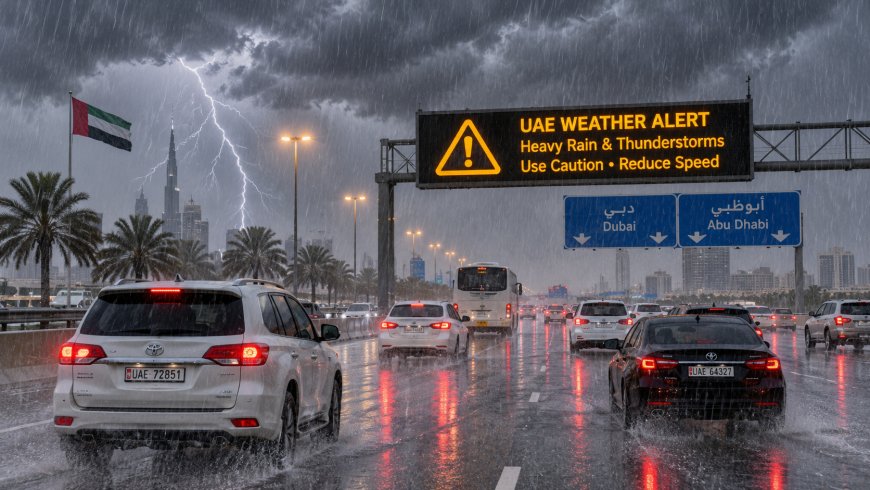
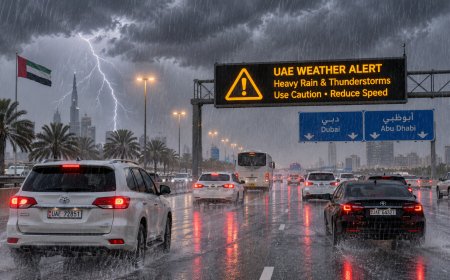
Residents across the UAE have been asked to slow down, stay clear of low-lying areas and follow safety guidance as an unsettled weather system sweeps in with rain, thunder, lightning and the possibility of hail.
The Ministry of Interior issued the nationwide alert on Wednesday through its official account on X. It warned of winds of varying strength, occasional thunderstorms and reduced horizontal visibility in some areas, conditions that can change quickly on the country's major highways.
What the authorities are asking people to do
The advice from the Ministry is straightforward. Drivers should reduce their speed and keep a safe distance from the vehicle in front, particularly when visibility drops. Residents should stay away from valley channels, known locally as wadis, and from places where water collects. The alert also told people to avoid beaches while the weather is unsettled, since rough seas are expected along the coast.
Motorists are being reminded that braking distances lengthen sharply on wet tarmac, and that sudden bursts of heavy rain can reduce visibility within moments. Officials stressed that following instructions is the simplest way to avoid accidents during a spell like this.
Where the rain has fallen so far
Parts of Sharjah and Fujairah were lashed by heavy showers on Wednesday, and rain was also reported elsewhere as the unstable conditions took hold. Video shared by a local weather page showed groups of camels apparently enjoying the downpour in Sharjah, a reminder that for many people in the Emirates rain is as much a spectacle as an inconvenience.
The National Centre of Meteorology (NCM) has issued orange and yellow alerts for affected areas. In the NCM's system, an orange alert signals a higher level of risk than a yellow one, so residents in orange zones in particular should check the latest updates before travelling.
What is driving the weather
According to the forecasting authority, moisture-laden winds from the Arabian Sea are combining with an approaching low-pressure system. That mix is expected to set off thunderstorms and heavy rain in parts of the country, with Dubai, Abu Dhabi and the northern emirates among the areas likely to be affected. The NCM had said the unsettled conditions would run from Monday through Thursday, with cloud cover increasing, rainfall becoming more widespread and temperatures falling gradually. Rain was forecast for both Wednesday and Thursday, and rough seas are expected to persist until at least Thursday.
Rules that apply when the weather turns
Wet-weather spells in the UAE often bring a reminder of the rules around driving and online behaviour, and local outlets have been rehearsing them again this week. Gulf News has set out the dos and don'ts, including that some violations can carry fines of up to Dh2,000. A separate report described a motorist in Dubai facing a Dh50,000 fine and the impounding of his vehicle for reckless driving in the rain.
The guidance also covers social media. Authorities have previously warned that spreading rumours about rain or weather conditions online can result in penalties of up to Dh1 million, and that taking photographs of rain while driving can attract a Dh800 fine. The message is that the best source of information is the official channel, not a forwarded message.
Practical steps for the days ahead
Common-sense preparation goes a long way. Check the NCM's forecasts and alerts before setting out, particularly on the morning commute. Postpone non-essential trips during the heaviest bursts of rain. Never attempt to cross a flooded road, since even shallow water can hide damage or carry a vehicle off course. Keep children and pets away from wadis, drainage channels and construction sites that may hold standing water. And if you must drive, turn on your headlights, keep your speed down and leave extra space.
Parents of school-age children and anyone who commutes between emirates should also keep an eye on official announcements from their schools and employers, as arrangements can shift at short notice when conditions worsen.
The wider picture
Unsettled spells of this kind are an established part of the UAE's autumn and winter pattern, and the country's emergency services and municipalities are well practised at responding to them. Even so, flash flooding in valleys and low-lying neighbourhoods remains one of the main risks, and every season the authorities find that the incidents that cause harm are usually those where someone ignored a warning.