






















Saudi Arabia, Allies Demand End to Israel's E1 Plan
Saudi Arabia joined seven other Arab and Muslim nations in demanding Israel halt its E1 settlement tender, warning it would end hopes of a viable Palestinian state.

Saudi Arabia Joins Eight Nations in Rejecting Israel's E1 Settlement Plan
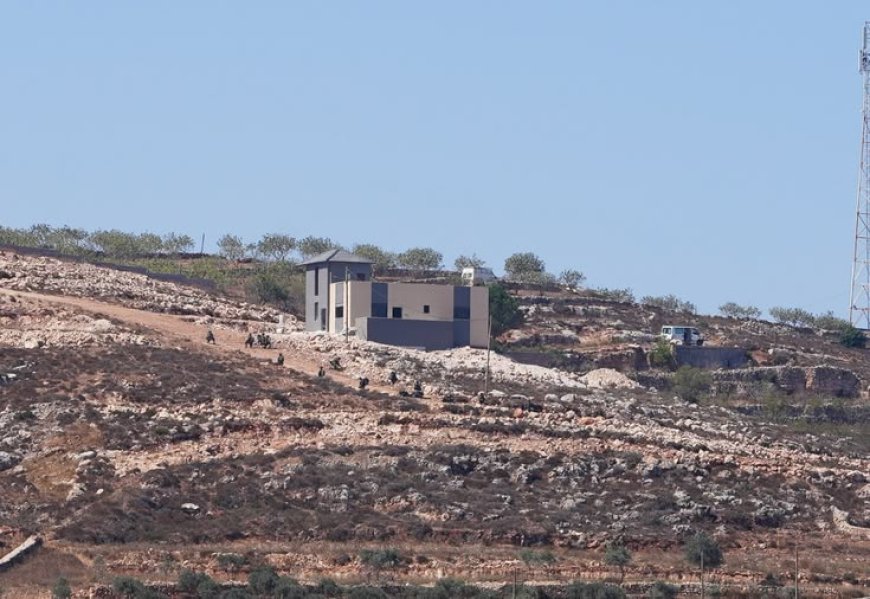
Saudi Arabia has joined a coalition of Arab and Muslim-majority nations in issuing a sharply worded rejection of Israel's latest settlement push in the occupied West Bank, warning that the project threatens to permanently derail any realistic path toward Palestinian statehood.
The joint statement, released by the foreign ministries of Saudi Arabia, Jordan, the United Arab Emirates, Indonesia, Pakistan, Turkiye, Qatar and Egypt, follows Israel's decision this week to formally advance construction plans in the highly sensitive E1 corridor east of Jerusalem. Israel's Ministry of Construction and Housing issued a tender on Tuesday covering more than 1,200 housing units in the area, reigniting a controversy that has simmered for years and drawn repeated international condemnation.
Why the E1 area matters so much
The E1 zone sits in a geographically pivotal position. Building on the land would effectively split the West Bank into two disconnected halves, cutting off any prospect of a contiguous Palestinian territory. It would also physically sever the West Bank from East Jerusalem — the area Palestinians have long envisioned as the capital of a future state. For decades, the E1 corridor has been viewed by diplomats and analysts as one of the single most consequential pieces of land in the entire Israeli-Palestinian dispute, precisely because construction there would foreclose options that other settlement activity does not.
In their statement, the eight foreign ministries described the plan as a "dangerous escalation" that would accelerate settlement expansion and undermine the territorial integrity of Palestinian land, particularly the crucial link between the West Bank and East Jerusalem. They argued the move would directly threaten the possibility of an independent and contiguous Palestinian state based on 1967 borders, with East Jerusalem serving as its capital — the long-standing international consensus position on the conflict's eventual resolution.
A direct challenge to Washington's own peace efforts
Notably, the statement went further than simply condemning Israeli policy. It explicitly framed the E1 tender as undermining the broader US-brokered peace initiative that President Donald Trump set in motion last year in an effort to bring the devastating Gaza war to a close. The ministers argued that construction in E1 runs directly counter to commitments Washington has made regarding preventing full annexation of the West Bank — commitments the eight nations characterised as central to achieving lasting regional stability.
The full scope of Israel's ambitions for the E1 area is significant. Broader plans for the zone, which cover roughly 12 square kilometres of land, envision the eventual construction of around 3,400 homes and were formally approved by the Israeli government last year. At the time, United Nations Secretary-General Antonio Guterres described the plans as posing an "existential threat" to the viability of a contiguous Palestinian state — language that underscored just how central this particular tract of land has become to the broader diplomatic standoff.
Growing international pushback
This week's tender for the first 1,234 housing units has triggered a wave of criticism well beyond the Arab and Muslim world. European governments, Palestinian officials and Israeli human rights organisations have all voiced objections in recent days, adding to the sense that the move risks reopening one of the most sensitive fault lines in the conflict at a moment when regional diplomacy is already under significant strain.
Beyond condemning the E1 tender specifically, the joint statement also addressed the broader pattern of settlement activity across the West Bank, describing Israel's policies as unequivocally unlawful. The ministers additionally condemned ongoing violence carried out by settlers against Palestinian residents and their property, and called for the international community to consider sanctions against individuals and entities responsible for, or financially supporting, illegal settlement construction.
A test for regional diplomacy
For Saudi Arabia in particular, the statement reinforces a consistent diplomatic position: that any lasting resolution to the Israeli-Palestinian conflict must be grounded in a genuine, viable pathway to Palestinian statehood. The Kingdom has repeatedly signalled that progress on that front remains a prerequisite for deeper regional normalisation efforts, even as economic and diplomatic ties across the Gulf continue to evolve.
With tensions already elevated by the broader war involving Iran and ongoing friction in Gaza, the E1 dispute adds yet another flashpoint to an already volatile regional landscape. How Israel responds to this latest wave of international pressure — and whether Washington intervenes to enforce its own stated redlines on annexation — could prove decisive in determining whether the settlement plan proceeds as tendered, or faces a genuine diplomatic reckoning in the weeks ahead.