
























UAE Beaches Reopen After Northern Coast Oil Spill
Ras Al Khaimah and Sharjah have reopened several beaches after authorities brought oil spill pollution under control along the UAE coast.

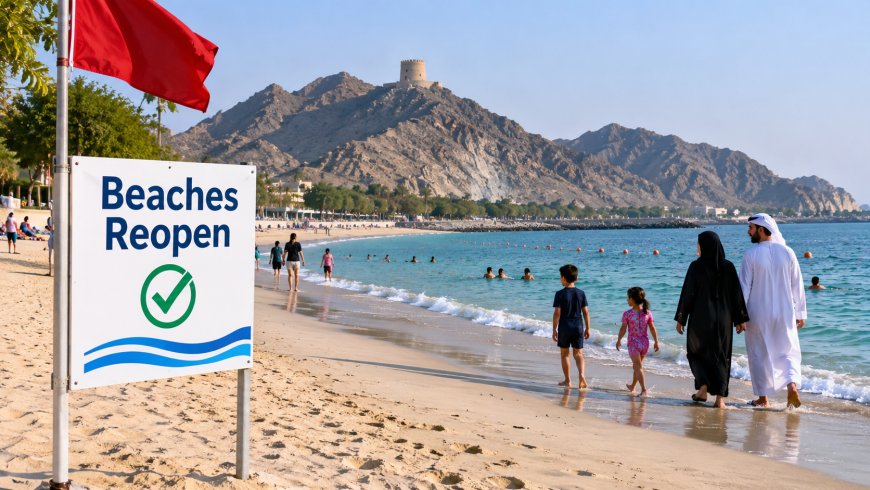
Beaches in parts of Ras Al Khaimah and Sharjah have reopened after authorities brought pollution from a recent oil spill under control, offering relief to residents, visitors and businesses along the UAE's northern coastline.
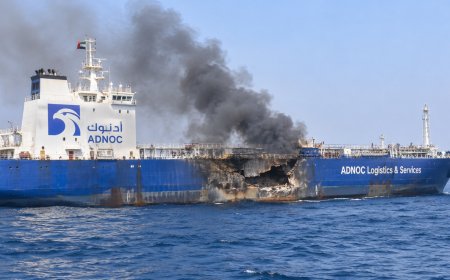
The closures followed a spill linked to a tanker damaged in a suspected attack in the Gulf last month. The pollution spread along sections of the coast and prompted precautionary beach closures in Ras Al Khaimah, Sharjah and Umm Al Quwain.
Sharjah's media office said the emirate's beaches and marine environment were safe for visitors and marine activities after the relevant authorities completed their response. The announcement marks an important step towards restoring public access, although it does not remove the need for continued environmental monitoring.
What Has Reopened?
Authorities in Ras Al Khaimah and Sharjah have reopened several beaches after pollution from the tanker-related oil spill was brought under control.
Sharjah officials confirmed that the marine environment was safe for the public to return.
The announcement is significant for coastal communities where beaches are not simply leisure spaces. They support tourism, hospitality, restaurants, water-based activities and the everyday routines of residents.
A prolonged closure can affect local businesses as well as public access to the shoreline.
The spill also raised concerns in Umm Al Quwain, where beaches were among the areas closed as authorities responded to the contamination.
However, the latest announcement specifically confirmed reopening in Ras Al Khaimah and Sharjah. Visitors should check local authority notices for the status of individual beaches rather than assume every affected site has reopened.
A Spill With Wider Implications
The incident highlights how maritime security risks can quickly become environmental and economic issues for coastal countries.
A vessel damaged offshore can release pollutants that move with ocean currents and weather conditions, potentially affecting beaches, wildlife habitats, fishing areas and marine infrastructure.
The spill was linked to a tanker damaged in what was described as a suspected attack. The precise circumstances should not be treated as established unless confirmed by investigators or relevant authorities.
The wider Gulf security environment has also affected commercial shipping.
The Strait of Hormuz is one of the world's most strategically important maritime routes, handling a significant share of global oil and gas shipments.
Any disruption to shipping activities in the region can have consequences beyond the immediate coastline.
Concerns Over Desalination Facilities
One of the most serious questions raised by an offshore oil spill is whether pollution could threaten desalination facilities.
Gulf countries rely heavily on desalination to supply drinking water, making the protection of seawater intake points a matter of public importance.
The spill raised concerns about possible effects on desalination plants, although no shutdowns had been reported at the time of the latest coverage.
Water authorities and environmental agencies must continue monitoring conditions and coordinating where necessary.
A visible return to normal beach activity is only one part of environmental recovery.
Environmental assessments may also consider water quality, shoreline residue, wildlife impacts and whether longer-term monitoring is required.
A Separate Maritime Incident
The regional maritime security situation remained unsettled on Thursday.
British maritime security company Ambrey reported that a merchant vessel had been struck by an unknown projectile approximately 14 nautical miles north-west of Ras Al Khaimah on Wednesday.
The incident caused a fire in the engine room, but no injuries or pollution were reported at the time, according to Ambrey.
The report highlights why coastal authorities and shipping operators must remain alert even as beaches reopen.
The safety of vessels, their crews and the surrounding marine environment are closely connected.
What Residents and Visitors Should Know
People planning a beach visit should follow notices issued by the relevant emirate's municipality or media office.
Reopening announcements apply to the locations named by authorities. Conditions can differ from one stretch of coastline to another.
Visitors should follow temporary restrictions, avoid disturbing marine wildlife and report visible oil residue or unusual pollution to local authorities.
Businesses should also rely on official guidance before resuming activities that depend on access to affected waters.
For residents, the reopening is a positive development after a disruptive incident.
However, the episode is also a reminder that environmental protection, maritime safety and regional stability cannot be treated as separate issues.
The UAE's northern coastline may be welcoming visitors again, while the work of protecting its marine environment continues.