

























ROX Begins UAE Vehicle Production in Abu Dhabi
Chinese automaker ROX has launched local vehicle production in Abu Dhabi, targeting 300,000 units annually by 2030 under the Made in the Emirates initiative.

A New Chapter for UAE's Industrial Ambitions
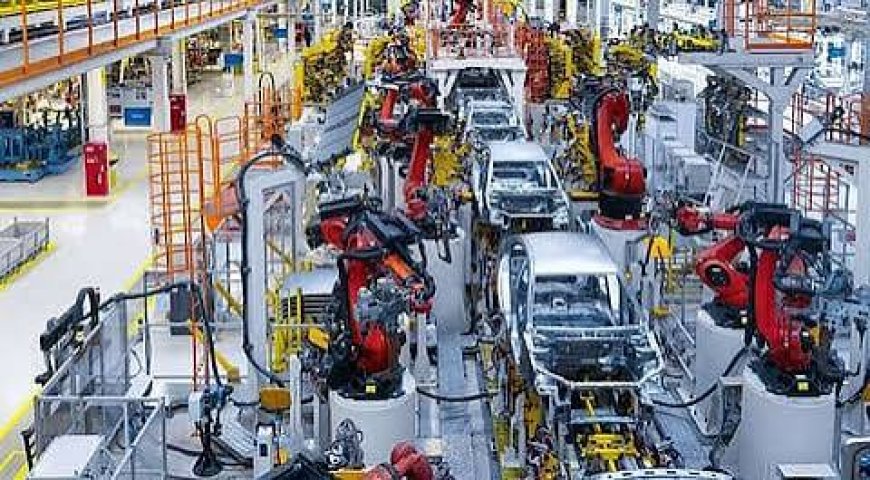
Abu Dhabi has taken a significant step toward becoming a genuine automotive manufacturing hub, with Chinese automaker ROX confirming the completion of its Advanced AI Manufacturing Centre and the start of local vehicle production. The first three ROX ADAMAS vehicles to carry the "Made in the Emirates" mark have now rolled off the production line, a milestone officials are framing as proof that the country can attract, and successfully localize, advanced industrial capability.
The development strengthens the partnership between ROX and the Abu Dhabi Investment Office (ADIO), which has spent recent years courting global manufacturers to establish production bases in the emirate rather than simply operating as a sales and distribution market.
Inside the New Facility
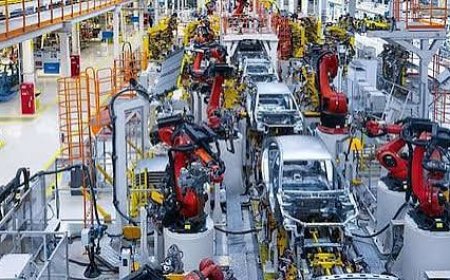
The manufacturing centre sits within Khalifa Economic Zones Abu Dhabi (KEZAD), spanning roughly 10,000 square metres of industrial space dedicated to vehicle assembly and component sub-assembly. The plant is equipped to handle local sub-assembly across more than 80 types of vehicle components, alongside full vehicle assembly, calibration, rain testing, road testing and final inspection before cars are cleared for delivery.
That range of in-house processes is notable in itself. Rather than functioning as a basic assembly line reliant on fully imported components, the Abu Dhabi facility is designed to build genuine local manufacturing depth, touching engineering, advanced materials, technology integration and skilled talent development — capabilities that support a far more sophisticated production ecosystem than simple final assembly.
Ambitious Production Targets
ROX has set out a clear scaling roadmap for the plant. Initial annual production capacity is expected to reach 20,000 vehicles in 2027, with plans to expand output nearly fifteen-fold to 300,000 vehicles a year by 2030. That trajectory would position the facility as a serious regional manufacturing base, capable of serving domestic UAE demand while also supporting exports to markets across the wider region and beyond.
Such targets are ambitious by any industry standard, and their achievement will depend heavily on how quickly ROX can build out its local supplier base, secure consistent component logistics, and scale a skilled workforce capable of supporting increasingly complex production volumes. Still, the company's decision to invest in a dedicated 10,000-square-metre facility from the outset suggests confidence in both UAE government support and long-term regional demand for its vehicles.
How This Fits Into UAE's National Strategy
The ROX facility is explicitly tied to two flagship UAE industrial initiatives: "Make it in the Emirates," a national push to boost domestic manufacturing capacity, and "Operation 300bn," the country's broader strategy to expand the contribution of advanced manufacturing and other high-value industries to the national economy. Government officials involved in supporting the project have described it as a clear example of how targeted industrial investment can translate directly into local production capability rather than remaining a purely financial or logistical arrangement.
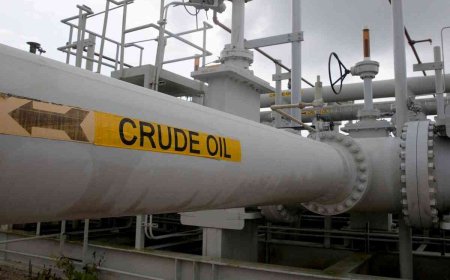
This framing matters for the UAE's longer-term economic diversification goals. As the country continues working to reduce its historic reliance on oil and gas revenues, building genuine manufacturing capability — particularly in technologically advanced sectors like automotive production — has become a strategic priority. A facility capable of producing hundreds of thousands of vehicles annually by the end of the decade would represent a meaningful contribution to that diversification effort, both in terms of economic output and skilled employment.
What It Means for Abu Dhabi's Automotive Sector
Beyond the immediate production numbers, the ROX facility deepens Abu Dhabi's connection to the broader automotive value chain. Local sub-assembly of dozens of component types requires a network of suppliers, logistics providers and technical specialists that extends well beyond the factory floor itself. Over time, that kind of ecosystem can attract further investment from component manufacturers and technology partners looking to serve the plant, creating a multiplier effect across the wider industrial base.
For a region that has historically imported the vast majority of its vehicles, having a facility capable of producing vehicles that genuinely qualify for the "Made in the Emirates" designation marks a meaningful shift. It also positions Abu Dhabi to compete more directly with other regional manufacturing hubs that have pursued similar automotive localization strategies in recent years.
Looking Ahead
With production now underway, the coming months will be a real test of how quickly ROX can move from an initial handful of vehicles to consistent, scaled output. The company's stated ambition — reaching 300,000 vehicles annually within four years — sets a demanding benchmark, but the infrastructure and government backing now in place give the project a credible foundation to build from.
For Abu Dhabi, the symbolism of the first ADAMAS vehicles rolling off the line may ultimately matter less than what follows: whether this facility becomes a genuine anchor for a broader domestic automotive industry, or remains a single high-profile production site. Either way, it marks one of the clearest signals yet of the emirate's intent to be taken seriously as an advanced manufacturing destination, not just a market for finished goods.