




















Saudi Non-Oil Growth Revised Up to 0.9% in Q2
Saudi Arabia's non-oil economy grew 0.9% in Q2 2026, GASTAT's revised data shows, even as regional conflict slashed oil output and dragged overall GDP down 4.8%.


Non-Oil Sector Shows Resilience as Oil Output Takes a Hit
Saudi Arabia's non-oil economy continued expanding through the second quarter of 2026, according to revised figures from the General Authority for Statistics, offering a measure of reassurance even as the Kingdom's overall economic output shrank under the weight of a severe, conflict-driven contraction in oil activity.
The updated data shows non-oil activities grew 0.9 percent year-on-year between April and June, an improvement on the 0.6 percent initially estimated when GASTAT released its flash reading in July. Government activities also expanded 0.9 percent over the same period. While still a marked slowdown from the robust 2.9 percent non-oil growth recorded in the first quarter, the revised figures reinforce evidence that domestic economic activity kept moving forward despite an external shock hitting the energy sector hard.
Oil Activities Bear the Brunt
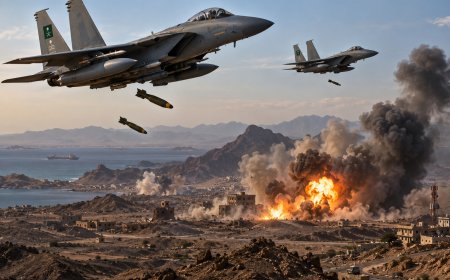
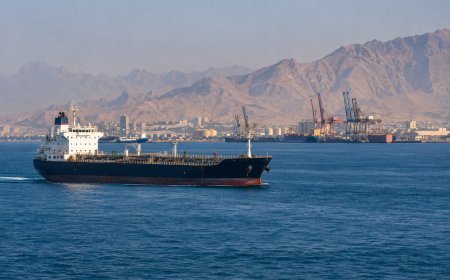
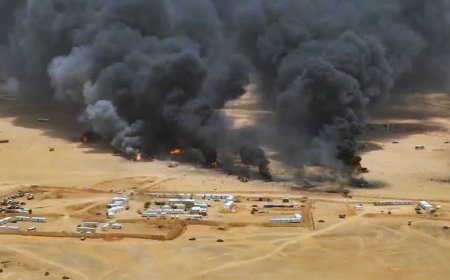
The headline story remains the sharp divergence between the Kingdom's oil and non-oil fortunes. Real GDP contracted by roughly 4.8 percent year-on-year in the second quarter, driven almost entirely by a 24.7 percent plunge in oil activities compared to the same period last year. That collapse stemmed largely from severe disruptions to crude exports tied to escalating regional conflict, including the near-closure of the Strait of Hormuz following the outbreak of hostilities involving Iran in late February.
On a seasonally adjusted quarterly basis, real GDP fell 4.9 percent from the first quarter, with oil activities dropping 21.5 percent and non-oil activities edging down a comparatively modest 0.5 percent quarter-on-quarter. Government activity, by contrast, ticked up 0.2 percent over the same three-month window, according to GASTAT's methodology, which separates the economy into oil, non-oil, and government components.
Where Growth Held Strongest
A closer look at sector-level data shows community, social and personal services posting the strongest annual growth at 4.1 percent, followed by finance, insurance and business services at 3.3 percent, and agriculture, forestry and fishing at 2.6 percent. On the expenditure side, government final consumption spending rose 5 percent year-on-year, gross fixed capital formation increased 2.7 percent, and private consumption expenditure grew a more modest 0.8 percent, pointing to continued public-sector-led momentum even as private spending grows more cautiously.
A Test for Vision 2030
Economists say the figures represent a genuine test of the Kingdom's long-running effort to reduce dependence on hydrocarbons under Vision 2030. The transition from 2.9 percent non-oil growth in the first quarter to 0.9 percent in the second demonstrates that domestic activity was not fully insulated from the regional shock, even though it managed to avoid an outright annual contraction — a distinction officials are likely to highlight as evidence that years of diversification investment are paying dividends.
The Organisation for Economic Co-operation and Development projected in June that Saudi Arabia's economy would expand 3.2 percent this year before accelerating to 4.3 percent in 2027, a forecast that will now be weighed against the fresh data showing just how exposed the Kingdom's topline growth remains to conditions along one of the world's most critical shipping corridors.
Fiscal Outlook Hinges on Regional Stability
Average inflation is projected at 2.2 percent for 2026, up slightly from 2.0 percent last year, while the fiscal deficit is expected to narrow to 3.7 percent of GDP from 5.8 percent previously. Much of that trajectory depends on how quickly maritime traffic through the Strait of Hormuz normalizes and how oil prices and production levels evolve in the months ahead. Analysts have flagged weaker global demand, ongoing trade tensions, tighter financing conditions and a prolonged decline in oil prices as key downside risks, while a faster return to normal shipping conditions or stronger productivity gains from ongoing reforms could produce a better-than-expected outcome.
The Bigger Picture
For a Kingdom that has spent the better part of a decade trying to reduce its reliance on crude exports, the second-quarter numbers offer a mixed but ultimately encouraging signal: the non-oil economy is proving durable even under real strain, even as the headline GDP figures remind policymakers just how much work remains before that transition is complete.