



























Ancient Saudi Arabia Was Once Green: Rivers, Lakes & Grasslands Covered Today's Deserts
New research reveals Saudi Arabia's deserts, like the Rub’ al Khali, were once lush with rivers, lakes, and grasslands, supporting wildlife and early humans during wet climate phases.

Ancient Saudi Arabia Was Once a Green Landscape with Rivers and Lakes, New Research Reveals
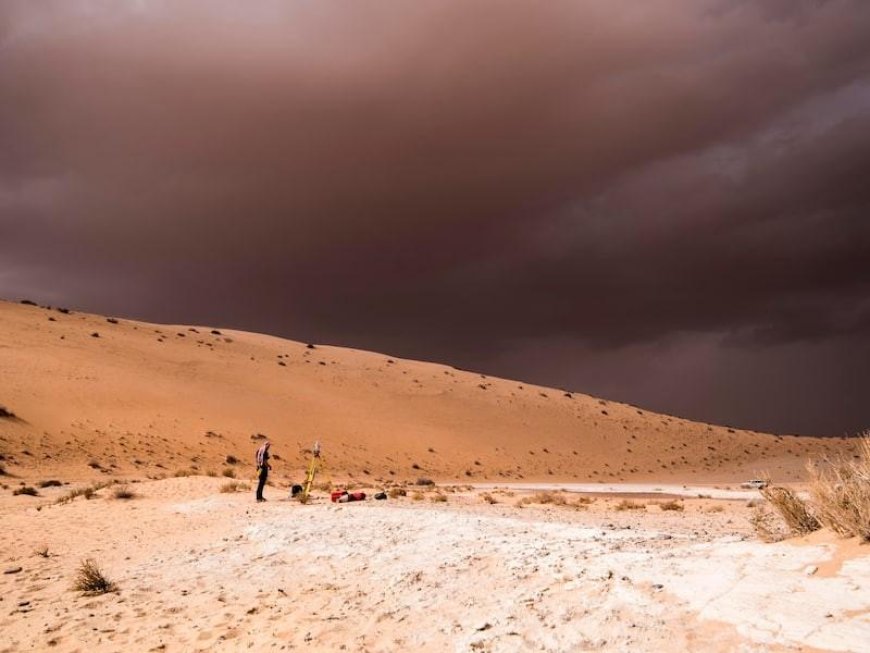
Recent scientific discoveries have transformed our understanding of Saudi Arabia’s deserts, revealing that vast regions like the Rub’ al Khali (Empty Quarter) were once thriving ecosystems of rivers, lakes, grasslands, and savannahs that supported diverse wildlife and early human populations. These findings challenge the perception of the Arabian Peninsula as a perpetually arid landscape.
A Green Past in a Desert Present
Today, about 95% of Saudi Arabia is desert, but research combining satellite imagery, geological data, and archaeological evidence shows the land experienced wetter climatic phases during the Pleistocene and early Holocene periods. Shifts in the African and Indian monsoons brought abundant rainfall, transforming arid plains into verdant environments.
Evidence of Ancient Water Systems
-
River Networks: Satellite images reveal ancient riverbeds that once formed massive drainage systems across now-barren landscapes.
-
Fossil Records: Discoveries of hippopotamus, crocodile, and elephant-like mammal fossils confirm the presence of long-lasting freshwater bodies.
-
Archaeological Finds: Stone tools and artifacts indicate repeated human settlement, suggesting early hunter-gatherer communities thrived in these lush habitats.
The Empty Quarter’s Lost Lake System
A landmark study led by King Abdullah University of Science and Technology (KAUST) and international partners, published in Communications Earth & Environment, uncovered evidence of a vast lake system in the Rub’ al Khali during a period known as "Green Arabia" (11,000–5,500 years ago).
Key findings include:
-
A lake covering 1,100 square kilometers and reaching depths of up to 42 meters.
-
An overflow event that carved a 150-kilometer-long valley into the desert floor.
-
Sediment layers spanning over 1,000 kilometers, illustrating how water systems expanded and contracted with monsoon cycles.
Implications for Human Migration
The existence of green corridors across Arabia provides new insights into prehistoric human migration from Africa to Eurasia. Rather than crossing a harsh desert, early humans likely traversed hospitable landscapes with abundant resources, settling in these regions during wet phases and migrating as conditions dried.
Connecting Past Climates to Present Initiatives
These ancient climate cycles underscore the dynamic nature of Arabia’s environment—oscillating between lush greenery and extreme aridity over millennia. Today, Saudi Arabia is leveraging this knowledge through initiatives like the Saudi Green Initiative, which aims to plant 10 billion trees to combat desertification, enhance biodiversity, and build ecological resilience.
Also Read: Saudi Arabia’s Internet Penetration Hits 99% Among 15–74-Year-Olds, GASTAT Survey Reveals
Conclusion
The discovery of Saudi Arabia’s green past enriches our understanding of Earth’s climatic history and highlights the profound connections between climate, ecosystems, and human evolution. As research continues, these insights not only illuminate the past but also inform future efforts to sustainably manage and restore arid landscapes in a changing world.