


















Saudi Arabia Pledges $1 Billion at Board of Peace Meeting for Gaza Reconstruction and Peace Efforts
Saudi Arabia commits $1 billion at inaugural Board of Peace meeting in Washington to support Gaza peace and reconstruction. Adel Al-Jubeir reaffirms two-state solution commitment as US pledges $10 billion.

Saudi Arabia Pledges $1 Billion at Inaugural Board of Peace Meeting to Support Gaza Peace and Reconstruction
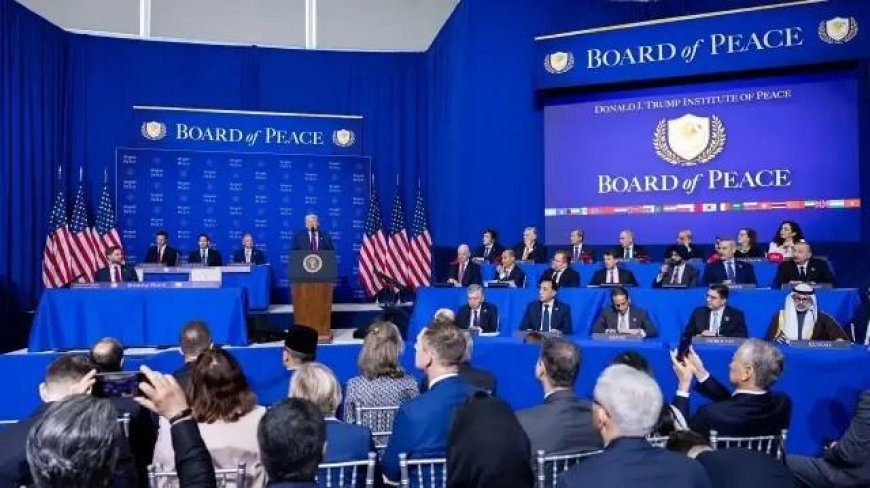
Washington D.C. — In a major diplomatic gesture aimed at promoting peace in the Middle East and supporting post-war recovery in the Gaza Strip, Saudi Arabia has pledged $1 billion over the coming years at the first meeting of the Board of Peace, an international initiative launched this week in Washington, D.C. The announcement underscores Riyadh's ongoing commitment to ending the Israeli-Palestinian conflict and helping alleviate humanitarian suffering in a region that has endured decades of tension and recent devastating warfare.
The pledge was announced by Adel Al-Jubeir, Saudi Arabia's Minister of State for Foreign Affairs, during the inaugural session of the Board of Peace held on February 19, 2026. Speaking at the event, Al-Jubeir reaffirmed the Kingdom's long-standing position in favour of a two-state solution, with Israel and Palestine coexisting in security and peace, and highlighted Saudi Arabia's historical role in regional peace diplomacy that spans multiple decades and initiatives.
"Saudi Arabia embarks on this journey toward establishing a just and lasting peace in the Middle East," Al-Jubeir said, emphasising the importance of cooperation and shared responsibility among nations to transform the region "from death and destruction to hope and prosperity." His words reflected both the gravity of the moment and the aspirations of many who seek an end to cycles of violence.
The Board of Peace: A New Diplomatic Initiative
The Board of Peace is a U.S.-led international effort intended to coordinate global support for stabilisation, humanitarian relief and reconstruction in the Gaza Strip — which has suffered severe damage after more than two years of devastating conflict between Israel and Hamas that has reduced entire neighbourhoods to rubble and displaced hundreds of thousands of civilians. The board's objective is to bring together countries willing to contribute financial resources, security support and institutional assistance to help rebuild civilian infrastructure and restore normalcy to the war-affected territory.
At the inaugural meeting, U.S. President Donald Trump announced that the United States would commit $10 billion toward the board's mission, while member states collectively pledged more than $7 billion in additional support for Gaza. Gulf nations such as Qatar, Kuwait, the United Arab Emirates (UAE), and Saudi Arabia were among those making substantial financial commitments, reflecting the region's stake in stability and its capacity to contribute to reconstruction.
The Saudi pledge of $1 billion reflects Riyadh's significant role among the founding members of the Board of Peace and its broader diplomatic support for Palestinian rights and regional stability that has been consistent throughout the Kingdom's modern history. In his remarks, Al-Jubeir referenced earlier Saudi initiatives such as the Arab Peace Initiative of 2002 — a landmark proposal that called for normalisation between Arab states and Israel in exchange for a full Israeli withdrawal from occupied territories and the establishment of a sovereign Palestinian state — as a foundation for today's efforts, showing continuity in Saudi diplomatic philosophy.
A Regional and International Effort
The Board of Peace's first meeting brought together representatives from nearly 50 countries, signifying broad international interest in playing a role in peace efforts, even as major power centres such as the European Union and certain Western capitals participated as observers rather than full members, indicating the complex diplomatic terrain such initiatives must navigate.
Countries including Indonesia, Morocco, Kazakhstan, Kosovo, and Albania pledged troops for a proposed international stabilization force, while Egypt and Jordan committed to providing police training for local security forces in Gaza, drawing on their experience and geographic proximity. These commitments address the critical security dimension of reconstruction, without which physical rebuilding cannot proceed safely or sustainably.
The initiative's structure and intent, however, have drawn mixed reactions from various quarters. Supporters argue that it represents a proactive, collaborative way to mobilise resources and expertise in support of conflict resolution and reconstruction, bypassing some of the bureaucratic hurdles that have hampered previous efforts through established channels.
Critics, meanwhile, question the Board's governance model and its relationship with established international bodies such as the United Nations, as well as its lack of direct Palestinian representation at the outset, raising concerns about whether initiatives designed without local input can effectively address local needs. These questions will likely shape debates about the Board's legitimacy and effectiveness as it moves forward.
Humanitarian Goals and Long-Term Vision
Saudi officials made clear that their financial contribution is intended not only to address immediate humanitarian concerns — such as food security, shelter and medical care for a population that has endured immense suffering — but also to lay the groundwork for sustainable development and institutional rebuilding once peace is secured. Al-Jubeir noted that Saudi Arabia's support aligns with both its historic position on the Palestinian cause and its broader vision for prosperity, security and cooperation in the Middle East.
The board's mission encompasses infrastructure rehabilitation, economic revitalisation and measures designed to support long-term stability, with several nations pledging sector-specific assistance that leverages their comparative advantages. For example, Gulf partners and other countries have offered to assist with digital infrastructure, healthcare, education and policing capacity building as complementary elements of reconstruction efforts, recognising that physical rebuilding must be accompanied by institutional development.
The humanitarian situation in Gaza remains dire, with widespread destruction of housing, hospitals, schools, and essential infrastructure. International assessments indicate that reconstruction will require billions of dollars and years of sustained effort, making commitments like Saudi Arabia's essential to any meaningful recovery.
Saudi Arabia's Diplomatic Role
Saudi Arabia has long positioned itself as a key player in Middle East peace efforts, leveraging its religious significance, economic resources, and diplomatic relationships with both Western and Arab powers. The Kingdom's support for Palestinian causes has been consistent, even as it has also pursued normalisation discussions with Israel in recent years.
The $1 billion pledge represents both continuity with past practice and an evolution toward more structured, multilateral engagement through mechanisms like the Board of Peace. It signals that Riyadh remains committed to playing a constructive role in regional stability even as it pursues its own national development goals under Vision 2030.
Towards a Just and Lasting Peace
Saudi Arabia's pledge at the Board of Peace conference marks a high-profile reaffirmation of its diplomatic priorities at a time of heightened global focus on the Middle East. Riyadh's $1 billion commitment — alongside substantial contributions from other nations and the U.S. — highlights a collective attempt to move beyond emergency relief toward a coordinated, forward-looking peace and reconstruction agenda that addresses root causes as well as symptoms.
The path ahead remains uncertain. Political obstacles, security challenges, and the deep divisions that have characterised the Israeli-Palestinian conflict for generations will not yield easily to financial commitments alone. But the scale of international mobilisation represented by the Board of Peace offers a glimmer of hope that sustained, coordinated effort might achieve what episodic interventions have not.
As discussions evolve within the Board of Peace and related diplomatic forums, the weight of international support and the alignment of geopolitical interests will play a crucial role in determining whether these initiatives can withstand political challenges and deliver meaningful progress for Gaza and the wider region. The coming months will test whether promises translate into action and whether reconstruction can proceed alongside genuine peace efforts.
For now, Saudi Arabia has made its commitment clear: $1 billion toward a future where Gazans can rebuild their lives and where peace might finally take root.
Saudi pledges billions. Nations unite. The long road to Gaza's recovery begins.