











Emerging Gulf Divide Between UAE, Saudi Arabia and Pakistan Could Challenge India’s Strategic Balance

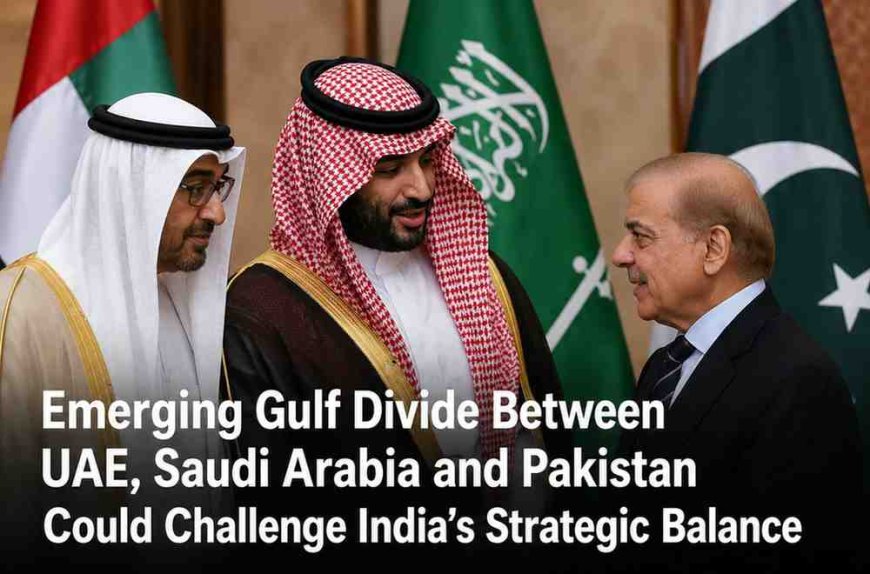
A new geopolitical divide involving the UAE, Saudi Arabia, and Pakistan is reshaping Middle East diplomacy, raising concerns about how India could be affected by shifting Gulf alliances.

 0
Emerging Gulf Divide Between UAE, Saudi Arabia and Pakistan Could Challenge India’s Strategic Balance

How Rising Tensions Between Gulf Powers and Pakistan May Impact India’s Regional Interests

A new geopolitical divide appears to be emerging in the Gulf region, involving the United Arab Emirates, Saudi Arabia, and Pakistan, with experts warning that India could eventually find itself navigating a far more complicated diplomatic landscape. The evolving tensions reflect deeper shifts in Middle Eastern alliances, strategic competition, and regional power politics at a time when global geopolitical uncertainty continues to rise.

For decades, Gulf countries such as Saudi Arabia and the UAE maintained relatively coordinated regional strategies, particularly regarding security, economic cooperation, and relations with South Asian nations. Pakistan also traditionally enjoyed close military, political, and religious ties with several Gulf monarchies.

However, analysts now believe significant differences are emerging between these countries on issues involving regional security, economic priorities, political influence, and strategic partnerships. These developments may eventually reshape diplomatic dynamics across the Middle East and South Asia.

According to geopolitical observers, one major factor behind the changing landscape is the growing divergence between Saudi Arabia and the UAE on broader regional strategies. Although both countries remain close allies in many areas, they have increasingly pursued independent foreign policy goals over recent years.

The UAE has adopted a more assertive and globally diversified approach focused on trade, technology, investment, logistics, and strategic autonomy. Abu Dhabi has expanded diplomatic relations with countries including Israel, China, India, and several Western powers while strengthening its position as a global financial and commercial hub.

Saudi Arabia, under Crown Prince Mohammed bin Salman, has also pursued ambitious economic reforms through Vision 2030. However, Riyadh continues placing heavy emphasis on maintaining leadership within the Islamic world while balancing regional diplomacy with its security interests.

Pakistan’s role in the evolving Gulf landscape has also become increasingly complex. Islamabad has traditionally depended heavily on Gulf countries for financial assistance, employment opportunities for expatriate workers, military cooperation, and energy supplies. Millions of Pakistani workers live in Saudi Arabia and the UAE, sending billions of dollars in remittances back home every year.

At the same time, Pakistan’s growing strategic relationship with countries such as China and Turkey has introduced new geopolitical dimensions. Some Gulf governments reportedly remain cautious about Islamabad’s evolving foreign policy alignments and its balancing strategy between competing regional powers.

Recent Middle East conflicts and regional tensions have further exposed differences among Gulf countries regarding security responses and diplomatic priorities. Reports suggesting disagreements over how aggressively to respond to Iran’s regional activities have added to perceptions of a widening divide among Gulf allies.

Experts believe these changing dynamics could create challenges for India, which has carefully built strong relationships with all major Gulf powers over the past decade. India today maintains deep economic, energy, defence, and diaspora ties with both Saudi Arabia and the UAE while also managing sensitive regional relationships involving Iran and other Middle Eastern states.

The Gulf region remains critically important for India’s economy and national security. Millions of Indian expatriates work across the UAE, Saudi Arabia, Qatar, Kuwait, and Bahrain. These workers contribute billions of dollars annually in remittances that support India’s economy and countless families back home.

India also imports a significant portion of its crude oil and liquefied natural gas from Gulf nations. Any major geopolitical instability or diplomatic fragmentation in the region could therefore directly impact India’s energy security and trade interests.

Over recent years, India has successfully strengthened ties with the UAE and Saudi Arabia through defence cooperation, infrastructure investments, technology partnerships, and trade agreements. The UAE has become one of India’s most important economic partners in the Middle East, while Saudi Arabia remains a crucial energy supplier and strategic ally.

At the same time, India has also maintained historically close ties with Iran, particularly regarding regional connectivity projects such as the Chabahar Port. Balancing relationships between Gulf Arab states and Iran has always required careful diplomatic management for New Delhi.

The possibility of a more fragmented Gulf political environment may complicate India’s strategic calculations further. If rival blocs or competing alignments emerge more clearly in the region, India could face increasing pressure to navigate sensitive geopolitical rivalries without damaging any key partnerships.

Analysts say India’s foreign policy has so far focused heavily on strategic balancing and pragmatic diplomacy. Rather than choosing sides in Middle Eastern disputes, New Delhi has generally prioritised economic cooperation, regional stability, and multilateral engagement.

However, growing competition between regional powers could make neutrality more difficult in future crises involving security, trade routes, or military alignments.

Pakistan’s position within the Gulf equation could also influence regional dynamics affecting India. Islamabad has long used its historical military and religious connections with Gulf states to maintain influence in the Islamic world. Any shifts in those relationships could impact broader regional diplomacy involving South Asia.

Meanwhile, China’s expanding economic and strategic presence in the Gulf adds another layer of complexity. Beijing has significantly increased investments, energy partnerships, and diplomatic engagement across the Middle East, including with Saudi Arabia, the UAE, and Iran.

For India, maintaining strong ties with all major Gulf countries while avoiding entanglement in regional rivalries will likely remain a key diplomatic priority. Experts believe New Delhi will continue emphasising economic cooperation, energy security, diaspora protection, and strategic autonomy in its Middle East policy.

Also Read: Ayushmann Khurrana and Sara Ali Khan Impress Fans in Pati Patni Aur Woh Do

The evolving geopolitical landscape highlights how rapidly changing alliances and strategic interests are reshaping global diplomacy. As the Gulf region undergoes significant transformation, India may increasingly find itself balancing relationships between multiple competing powers while protecting its own long-term economic and security interests.

What's Your Reaction?

like

dislike

love

funny

angry

sad

wow