


























Saudi Arabia's Humain Expands AI Reach Nationwide
From justice ministry tools to Arabic-language creative software, Humain's latest partnerships mark a major step in Saudi Arabia's push to build a homegrown AI industry.


Building an AI Stack From the Ground Up
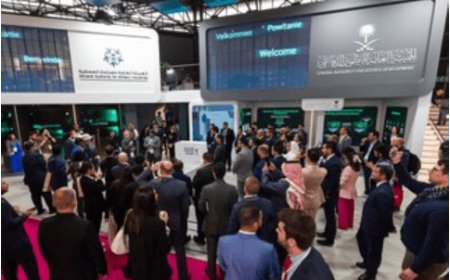
Saudi Arabia's ambitions to become a serious player in global artificial intelligence are taking clearer shape, with Humain, the PIF-backed venture chaired by Crown Prince Mohammed bin Salman, announcing a wave of new partnerships covering everything from government services to consumer creative tools. Since its launch, Humain has positioned itself as the vehicle for building the Kingdom's entire AI stack, spanning data centers, cloud infrastructure, foundation models, and end-user applications, and its latest moves suggest that strategy is now moving from planning into execution.
The developments arrive as the Kingdom works to translate its heavy investment in AI infrastructure into practical, commercially useful applications, a challenge that regional analysts have flagged as critical if Gulf countries want their AI spending to pay long-term dividends rather than remain confined to infrastructure alone.
Government Services Get an AI Upgrade
Among the most consequential developments is a new agreement between Saudi Arabia's Ministry of Justice and Humain aimed at introducing AI-powered tools into the justice system. While details of the rollout remain limited, the partnership signals a broader trend of Saudi government bodies integrating AI directly into public service delivery rather than treating the technology as a peripheral experiment.
This follows a wider pattern across the Kingdom's institutions. The Saudi Data and Artificial Intelligence Authority has been expanding use of its National Artificial Intelligence Index across government agencies, a tool designed to assess how ready different parts of the public sector are to adopt AI systems and to guide further investment where it is needed most.
Arabic-Language Creative Tools Reach the Public
On the consumer side, Humain has partnered with Adobe to offer eligible Saudi citizens and residents free access to selected features of Adobe's Firefly and Express creative platforms. The collaboration also includes joint development of image-generation models designed to reflect Saudi cultural heritage, an effort to ensure AI-generated creative content resonates with local audiences rather than defaulting to generic, Western-centric outputs.
This kind of localization has become a recurring theme in Gulf AI strategy, with governments in the region increasingly focused on ensuring that AI tools serve local languages, customs, and cultural context rather than simply importing technology built for other markets.
Cloud Giants Race to Establish a Foothold
The infrastructure side of the equation is advancing just as quickly. Amazon Web Services is preparing to launch its first Saudi cloud infrastructure region in December, a project representing more than $5.3 billion in planned investment, closely following Microsoft's own Azure region set to launch the previous month. Both moves reflect the intensifying competition among global cloud providers to secure an early presence in a market the Kingdom is actively courting.
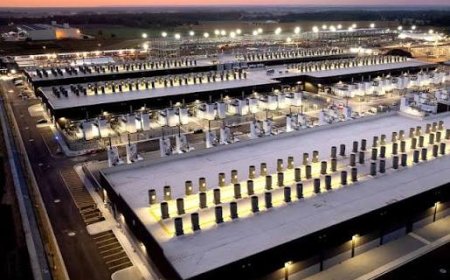
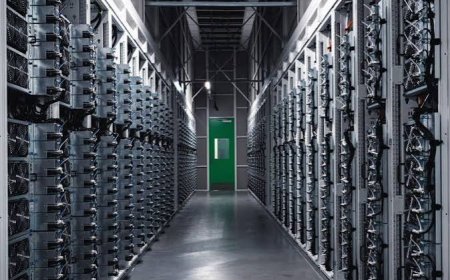
Humain itself has unveiled partnerships with Together AI, AMD, and digital infrastructure firm DataVolt to develop large-scale AI infrastructure, including an initial 100-megawatt data center at Neom's Oxagon industrial zone on the Red Sea. The wider DataVolt campus is ultimately planned to reach 1.5 gigawatts of capacity, part of a broader ambition to position Saudi Arabia as a regional hub for AI compute power. Separately, AWS and Humain plan to make additional capacity available through the Kingdom's first dedicated AI Zone, using a mix of custom chips and processing infrastructure from established technology partners.
Training the Workforce for an AI-Driven Economy
Infrastructure and partnerships alone will not be enough without a skilled workforce to operate and build on top of these systems. To that end, Saudi Arabia's Communications and Information Technology Ministry has partnered with social media company Snap to train more than 20,000 Saudi nationals in digital innovation skills by 2030, part of a broader effort to develop homegrown technical talent alongside the Kingdom's infrastructure investments.
This workforce push mirrors concerns raised in recent regional research suggesting that Gulf countries need to convert their substantial AI infrastructure spending into commercially viable, locally developed products rather than remaining purely importers and hosts of technology built elsewhere.
A Central Pillar of Vision 2030
Taken together, these developments illustrate how central AI has become to Saudi Arabia's broader economic diversification strategy. What began as a series of infrastructure announcements is increasingly translating into tangible services touching government operations, creative industries, and everyday consumer technology. With cloud providers racing to establish regional footholds and Humain expanding its partnership network across sectors, the coming months are likely to bring further announcements as the Kingdom works to cement its position as a serious contender in the global AI landscape.