




















Gaza Water Crisis Worsens Into Public Health Emergency
Damaged desalination plants and sewage networks are pushing Gaza toward a deeper public health crisis, with aid agencies warning of lasting harm to children.

Infrastructure Pushed to the Breaking Point
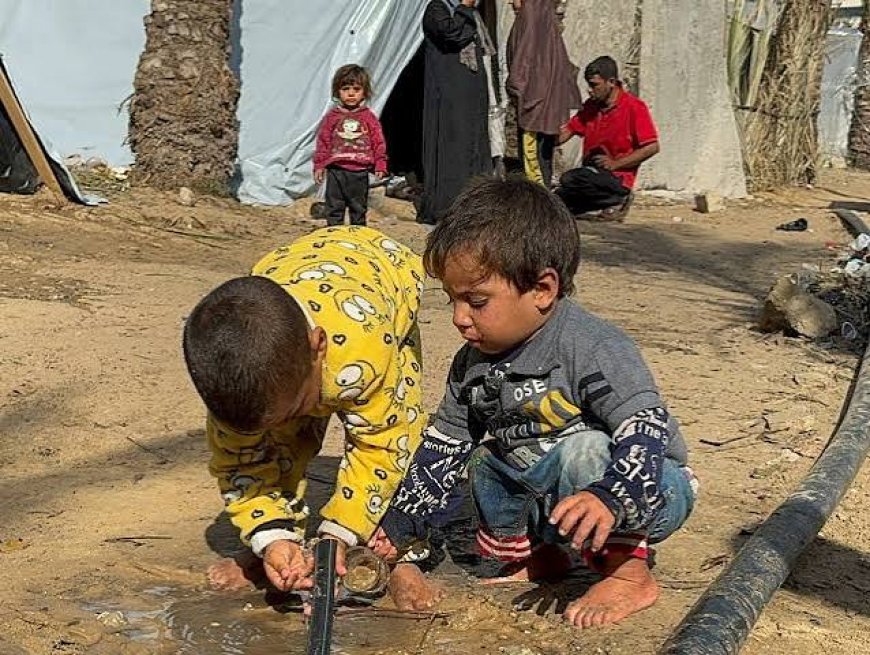
Gaza's water system is edging closer to full collapse, according to humanitarian agencies monitoring conditions on the ground, transforming what was already a severe shortage into a deepening public health emergency. Desalination plants, wells, and sewage networks across the territory have sustained repeated damage, leaving large segments of the population without reliable access to safe drinking water.
Aid organizations say the crisis stems from a combination of factors: direct damage to water infrastructure from months of conflict, restrictions on the entry of essential repair materials, and the sheer difficulty of reaching damaged facilities in areas still affected by insecurity. The result is a population increasingly dependent on water trucks and emergency humanitarian deliveries rather than a functioning municipal system.
Children Bear the Heaviest Burden
Medical experts warn that the consequences of this crisis fall disproportionately on Gaza's youngest residents. Children consume more water relative to their body weight than adults and have less-developed immune systems, making them especially vulnerable to the effects of contaminated supplies. Prolonged exposure to untreated water has been linked to chronic diarrhea, stunted growth, and developmental delays that can persist long after any ceasefire takes hold.
Public health specialists caution that even a full and lasting ceasefire allowing water facilities to return to maximum capacity would not immediately reverse the damage already inflicted on children who have endured months of contaminated water exposure. The effects of malnutrition and repeated infection, layered on top of water-borne illness, create compounding health risks that outlast the immediate crisis.
A Healthcare System Under Additional Strain
The water crisis is placing further pressure on a healthcare system already struggling to cope with the broader humanitarian situation in Gaza. Hospitals and clinics, many operating with limited supplies and damaged facilities, are seeing rising caseloads tied to water-borne illness at the same time they continue to manage the wider consequences of the conflict.
Health workers describe a self-reinforcing cycle: damaged water infrastructure increases the burden of disease, while the same shortages of fuel, spare parts, and medical supplies that hamper infrastructure repair also limit the healthcare system's capacity to treat the resulting illnesses. Breaking this cycle, aid groups argue, requires addressing water infrastructure and medical access simultaneously rather than treating them as separate problems.
Restrictions Complicate Repair Efforts
Humanitarian organizations report that requests to bring in essential equipment, including engine oil needed for groundwater extraction and water trucking, have frequently been denied or delayed. Restrictions on spare parts have affected not only water pumps but also generators and ambulances, according to agencies operating in the territory, compounding the difficulty of maintaining even basic services.
This dynamic has created what aid workers describe as a self-perpetuating shortage: infrastructure that might otherwise be repaired remains offline because the materials needed for repairs cannot reach the teams responsible for fixing it. Agencies have called for unrestricted access for repair equipment and construction materials, arguing that emergency water deliveries alone cannot substitute for a functioning system.
The Long Road to Recovery
Restoring Gaza's water infrastructure to a functional state will require far more than emergency interventions, according to humanitarian officials. Rebuilding desalination plants, wells, pumping stations, and sewage systems demands sustained access for aid organizations, a reliable pipeline of construction materials and treatment supplies, and a broader reconstruction effort addressing the scale of damage sustained during the conflict.
Even with that investment, agencies caution that the health consequences already experienced by Gaza's population, particularly its children, may not be fully reversible. The crisis has moved beyond a question of access to water in the short term and into a longer-term public health challenge that will likely require years of sustained international support to address.
As attention remains focused on the broader political and security situation in the region, aid organizations are urging that Gaza's water crisis not be treated as a secondary concern. With nearly 90 percent of water and sanitation infrastructure reported damaged or destroyed across the territory, the scale of the challenge facing humanitarian agencies, and any future reconstruction effort, remains immense.