





























Powerful Partnership: Kazakhstan and Saudi Arabia Unite to Protect Rare Saker Falcons
Kazakhstan and Saudi Arabia have launched a falcon release program to revive the endangered saker falcon population, releasing 30–40 birds annually in Altyn-Emel National Park.

Kazakhstan and Saudi Arabia Launch Falcon Release Program to Save Endangered Saker Falcons
Kazakhstan and Saudi Arabia have joined forces in a major conservation effort aimed at restoring the population of endangered saker falcons, launching a coordinated release program in Central Asia. The initiative represents a significant step in international wildlife cooperation.
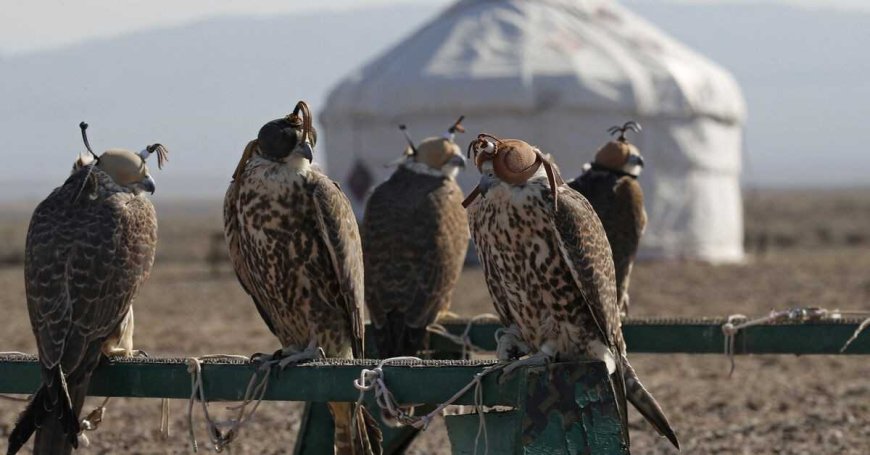
The initiative, supported by Saudi Arabia’s state-backed Saudi Falcons Club in partnership with Kazakh research institutions, recently saw dozens of captive-bred falcons released into the wild at Altyn-Emel National Park in southeastern Kazakhstan. The move is part of a long-term plan to revive the species, which has seen a dramatic population decline in recent decades. The release was carefully planned.
Around 30–40 falcons are expected to be released each year over the next three years under the program. Conservationists say the effort is critical, as the saker falcon population in Kazakhstan has dropped by as much as 90% due to habitat loss and environmental pressures. The decline has been alarming.
The saker falcon, a migratory bird known for its speed and significance in traditional falconry, once ranged widely from Central Europe to East Asia. However, illegal hunting, habitat destruction, and declining prey availability have pushed the species toward the endangered category. The threats are multifaceted.
Officials involved in the project emphasized that Kazakhstan provides an ideal environment for reintroducing the birds. Its vast steppe landscapes and natural nesting conditions make it one of the most important habitats for falcon breeding and survival. The terrain is well-suited for their return.
Each released falcon has been equipped with GPS trackers and microchips, allowing scientists to monitor their movement, behavior, and adaptation in the wild. This data will play a key role in assessing the success of the program and improving future conservation strategies. Real-time tracking is invaluable.
Experts say the goal is not just to release the birds, but to ensure they successfully integrate into the ecosystem, reproduce, and establish stable populations over time. The initiative is also part of broader international efforts to protect biodiversity and restore endangered species to their natural habitats. Long-term viability is the aim.
The collaboration reflects growing environmental cooperation between Kazakhstan and Saudi Arabia, combining scientific research with cultural heritage. Falcons hold deep historical and cultural significance in the Arabian Peninsula, where falconry has been practiced for thousands of years. The connection is profound.
Also Read: Market Impact: Saudi Arabia and Russia Drive OPEC+ Oil Output Increase
By returning these birds to their natural environment, conservationists hope to restore ecological balance and secure the future of the species for generations to come. The program is a model for cross-border conservation efforts. The future of the saker falcon looks brighter.