




























Snowfall in Saudi Arabia: Rare Desert Snowfall Blankets Northern Regions
Stunning snowfall transforms Saudi Arabia's northern deserts into a winter wonderland. Explore the causes, local reactions, and what this rare event means for climate and tourism.

Rare Snowfall Transforms Saudi Arabia's Desert Landscape
In an extraordinary meteorological event, parts of northern Saudi Arabia have been transformed by a blanket of snow, turning iconic desert vistas into stunning winter landscapes. This rare phenomenon, occurring in mid-December, has captivated residents and sparked global conversations about shifting weather patterns and climate variability in the Arabian Peninsula.
A Desert Winter Wonderland
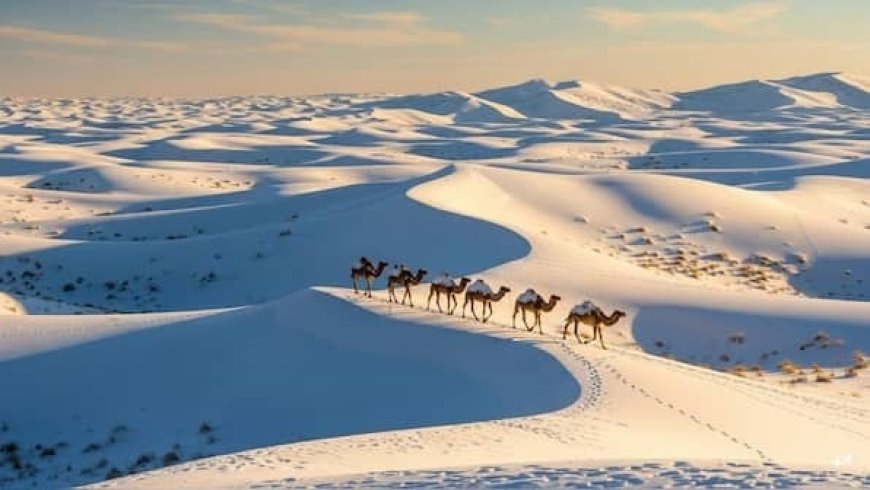
The snowfall primarily affected the Tabuk Province and its highlands, with elevated areas like Jabal Al-Lawz—a mountain rising 2,600 meters above sea level—receiving significant accumulation. Temperatures plunged below freezing, allowing snow to settle on sand dunes, rocky plains, and mountain peaks, creating scenes more akin to alpine regions than a desert kingdom.
Viral social media images and videos showcased the surreal sight of snow-dusted camels, families playing in the snow, and vast white expanses where only sand is expected. The event was part of a broader cold spell that also brought widespread rainfall and sharp temperature drops to central and northern regions, including areas north of Riyadh.
Public Reaction and Daily Adjustments
The unexpected weather prompted a mix of awe and practical adjustments. On social media, many expressed disbelief, joking about the images being AI-generated, while others celebrated the rare "winter wonderland." Local authorities issued safety advisories for icy roads, and some schools in affected areas temporarily shifted to remote learning as a precaution.
Meteorological Causes and Climate Context
Meteorologists attribute this event to an unusual convergence of cold air masses interacting with moisture-laden clouds. While snowfall is not entirely unprecedented in Saudi Arabia's northern highlands, the scale and intensity of this event are notable.
Climate scientists note that such anomalies are becoming more frequent globally due to increasing atmospheric variability. A warmer atmosphere holds more moisture, which can lead to more intense precipitation—including snow—when cold conditions align, even in arid regions. These events highlight the complex and sometimes counterintuitive impacts of broader climate dynamics.
Also Read: Vision 2030 Drives Record Tourism: Saudi Arabia Leads Middle East Growth in 2025
Implications for Tourism and the Future
Interestingly, this natural event aligns with Saudi Arabia's strategic investments in winter tourism. The Trojena development in the Sarawat Mountains, part of the NEOM megaproject, is being purpose-built as a year-round destination featuring ski slopes and winter sports facilities. It is slated to host the 2029 Asian Winter Games.
This recent snowfall offers a natural preview of the winter experiences Saudi Arabia aims to cultivate, even as it serves as a potent reminder of our changing climate. The event underscores how traditional climatic boundaries are shifting, presenting both challenges and unexpected opportunities for the region.