
























Israel Bombs Syria Airfield After Turkish Visit
Israeli jets hit Syria's Abu al-Duhur airbase near Idlib hours after a Turkish military delegation inspected the site, drawing a rare US rebuke.

Israeli Airstrikes Hit Syrian Airbase Following Turkish Military Visit, Drawing US Concern
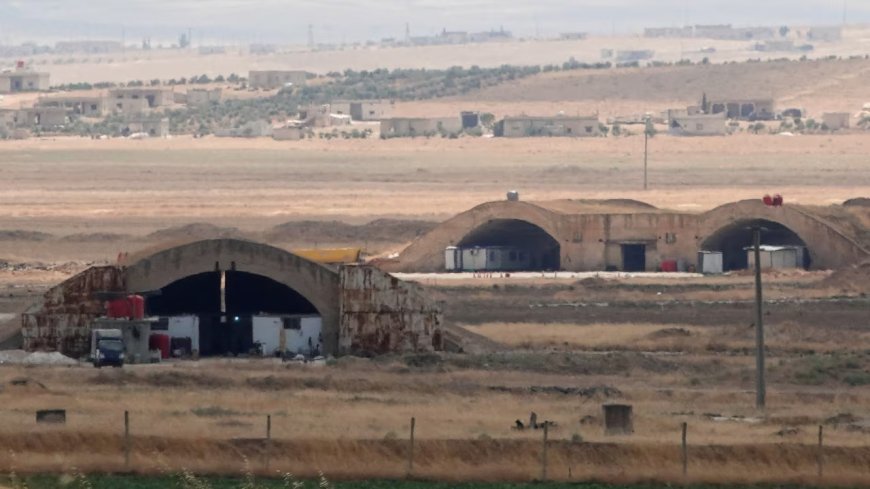
Israeli warplanes carried out a series of overnight strikes on a disused military airfield in northwestern Syria early Tuesday, an attack that came only hours after a Turkish military delegation had visited the site to explore plans for its reactivation. The timing of the strikes has fueled speculation that Israel intended to send a pointed message to Ankara over its expanding military footprint inside Syria.
According to Syrian state media, eight strikes hit the runway and storage facilities at the Abu al-Duhur airfield, located in the eastern countryside of Idlib province, roughly 50 kilometers southwest of Aleppo. Syrian officials said the attack caused significant material damage to the base's infrastructure but resulted in no casualties, since the facility has remained out of active service for years. Israel's military has so far declined to comment on the operation, and no side has formally claimed responsibility, though the pattern closely matches Israel's long-running campaign against Syrian military infrastructure.
A Base Watched Closely Before the Strike
Reporting from sources familiar with the sequence of events suggests the strike was not a random occurrence. A Turkish military delegation reportedly toured the airfield the day before the attack, examining the site as part of early-stage plans to restore its runways, according to the Syrian Observatory for Human Rights, a UK-based war monitor. Several Turkish vehicles were said to still be present on the airfield grounds at the time, alongside a reconnaissance aircraft operating in the surrounding airspace.
Later that evening and into the early hours of Tuesday, an Israeli reconnaissance flight was observed passing over the same location before the strikes began at dawn. That sequence has led regional analysts to conclude that Israel had been tracking activity at the airfield closely, timing its response to coincide with — and interrupt — Turkey's involvement in rebuilding the site.
Washington's Rare Rebuke
The strikes prompted an unusually direct response from the United States. Tom Barrack, the US special envoy for Syria, publicly criticized the attack, describing the confirmed Israeli strikes on Abu al-Duhur as an escalation that does not serve the cause of regional stability. His remarks were notable both for their bluntness and for the fact that Washington has generally avoided openly challenging Israeli military actions inside Syria.
Damascus, for its part, condemned the strikes and reiterated concerns about repeated Israeli incursions into Syrian territory since the fall of Bashar al-Assad's government in December 2024. Syrian President Ahmed al-Sharaa's administration has been working to rebuild the country's armed forces, even as Israel has warned it will not tolerate Syria reconstituting military capabilities it views as a potential future threat.
Turkey's Widening Role in Syria
The episode also highlights growing friction between Israel and Turkey over the shape of post-Assad Syria. Ankara has emerged as one of the new Damascus government's closest allies, backing armed groups, deploying its own forces in parts of the north, and now reportedly assisting with efforts to restore Syrian air infrastructure. Israeli officials have previously carried out strikes intended to discourage exactly this kind of cooperation, wary of Turkey helping the Hay'at Tahrir al-Sham-linked authorities rebuild an operational air force.
Relations between Jerusalem and Ankara have deteriorated sharply over the past two years, strained further by Israel's war in Gaza and by Turkish criticism of Israeli operations across Syrian territory. Israel has continued to maintain troops inside a UN-patrolled buffer zone in the Golan Heights that has separated Israeli and Syrian forces since 1974, alongside a stated intention to preserve a broader "security zone" in southern Syria — a policy Damascus has repeatedly protested.
Regional Stakes
For Gulf and wider Arab audiences, the strike is being read as part of a larger contest over who shapes Syria's military reconstruction. With Turkey positioning itself as a security partner to Damascus and Israel signaling it will act unilaterally to prevent any buildup near its borders, northern Syria has become a proxy arena for competing regional interests even as the country works to stabilize after more than a decade of civil war.
Analysts note that Abu al-Duhur, though currently non-operational, holds symbolic and strategic value given its proximity to the Turkish border and its history as a base for what remains of Syria's post-war air fleet. Whether this latest strike deters further Turkish involvement or instead hardens Ankara's resolve to proceed with reconstruction plans will likely shape the next phase of an already volatile relationship between the two regional powers.
Next Article