



























Six Killed as Houthi Missiles Strike Cargo Ship in Bab Al-Mandeb Strait
A missile strike blamed on Yemen's Houthi movement has killed six people and wounded ten aboard a cargo vessel transiting the Bab Al-Mandeb Strait, the first fatal attack on commercial shipping linked to the group since the US-Israel war on Iran began. The incident deepens fears over the safety of one of the world's most critical maritime chokepoints.

Article:
A Deadly Escalation at a Vital Global Chokepoint
A cargo vessel came under a devastating missile assault this week as it passed through the Bab Al-Mandeb Strait, leaving at least six people dead and around ten others wounded in what officials in Yemen are calling the first fatal strike on commercial shipping tied to the Houthi movement since fighting between the United States, Israel and Iran erupted earlier this year.
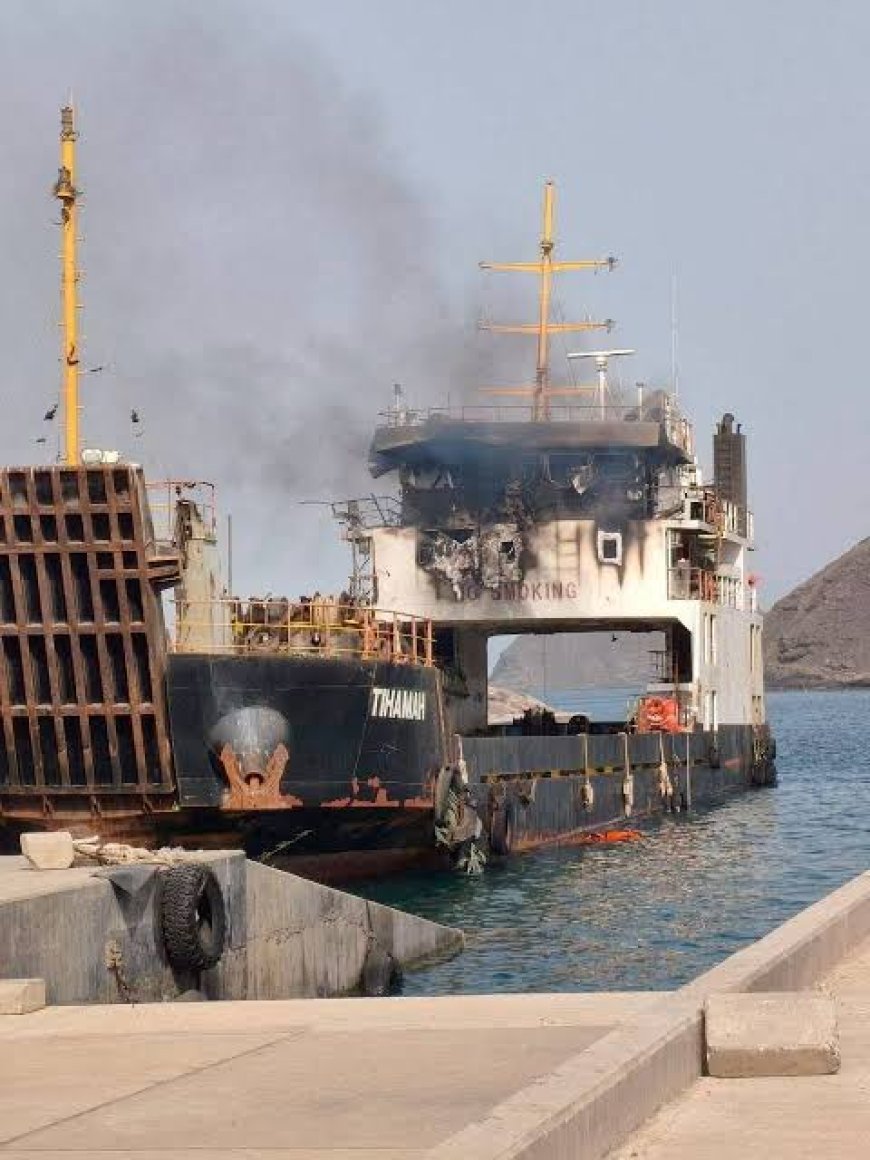
The vessel, an Egyptian-owned ship named Tihamah, was reportedly targeted twice in quick succession — a tactic sometimes referred to as a "double-tap" strike, in which a follow-up attack is launched as rescue teams move in to assist the wounded. According to Yemen's Transport Ministry, the first wave of ballistic missiles ignited a fire on board and killed several crew members, while a second strike claimed the lives of rescue workers attempting to reach survivors.
Who Was on Board
Yemeni authorities said the dead included three Pakistani nationals and one Indonesian crew member, along with two members of government-aligned coastal security forces who had rushed to the scene as part of the rescue operation. Several more people sustained injuries in the blasts, and search efforts around the vessel continued in the hours that followed.
Yemen's internationally recognised government placed direct blame on the Houthi movement, though the group's official channels had not issued a claim of responsibility at the time of writing. Separately, Houthi-affiliated media suggested the group had targeted a vessel it believed was carrying military supplies linked to Saudi Arabia, though no vessel was formally named and there was no immediate confirmation from Riyadh.
Why Bab Al-Mandeb Matters So Much Right Now
The strait, which separates the Arabian Peninsula from the Horn of Africa and links the Red Sea to the Gulf of Aden, has taken on outsized strategic importance in recent months. With the Strait of Hormuz effectively choked off amid the broader confrontation between Washington, Tehran and Israel, Bab Al-Mandeb has become one of the few remaining corridors through which Gulf oil producers, including Saudi Arabia, can move crude to international markets.
That significance has made the waterway a prime target. The Houthis had earlier declared their intent to tighten pressure on Saudi Arabia by threatening a naval blockade in the Red Sea, and this latest strike suggests the group is following through on that threat with increasingly lethal consequences for civilian and commercial crews caught in the crossfire.
A Region Already on Edge
The attack did not occur in isolation. It came within hours of a separate, unrelated incident in the Gulf of Oman, where United States forces said they disabled a Panama-flagged cargo ship after it allegedly attempted to breach an American-imposed blockade on Iranian ports. Together, the two episodes highlight how the broader conflict is spilling into some of the world's busiest and most economically vital shipping lanes, with consequences that extend well beyond the immediate combatants.
For Saudi Arabia, the timing is especially delicate. The kingdom has spent months rerouting oil exports away from the Strait of Hormuz and toward Red Sea ports specifically to avoid disruption from the Iran conflict, only to find that alternative route now similarly exposed to attack. Analysts have warned that a sustained blockade or repeated strikes on shipping through Bab Al-Mandeb could force further rerouting, additional insurance costs, and renewed volatility in global energy markets.
Government and International Reaction
Yemen's transport and coast guard authorities condemned the strikes as a flagrant violation of the safety of civilian mariners and international shipping law. The Houthi movement's chief negotiator, meanwhile, has previously accused Saudi Arabia of using the collapse of a long-standing truce to tighten its own blockade on Yemeni ports, framing the group's actions as retaliatory even as it says it remains open to negotiations, provided any settlement addresses the blockade.
No formal statement had been issued by Saudi authorities regarding the specific incident by the time of publication, though the kingdom has consistently condemned Houthi attacks on shipping and regional infrastructure as destabilising and unlawful.
What Comes Next
With casualties now confirmed among international crew members, pressure is likely to mount on global shipping bodies and maritime insurers to reassess risk classifications for the Bab Al-Mandeb corridor. Some shipping lines had already begun diverting vessels around the Cape of Good Hope in Africa to avoid the Red Sea entirely, a costly detour that adds significant time and expense to global trade routes.
For now, the Yemeni government says search and rescue operations remain ongoing, and further details about the extent of the damage to the Tihamah are still emerging. The incident is expected to feature prominently in discussions among regional and international mediators who have been working to de-escalate the broader conflict engulfing the Gulf region.