




























Millions Witness Rare Total Solar Eclipse Sweeping Across the Globe Today
A total solar eclipse is sweeping across parts of the globe today, marking the first instance of totality visible anywhere on Earth in more than two years and drawing sky watchers, scientists and livestream audiences worldwide. NASA is broadcasting the event live as the moon's shadow passes over selected regions. A total solar eclipse is crossing parts of the globe today, the first total eclipse visible on Earth in more than two years, with NASA livestreaming the event.

A Rare Celestial Event Captivates the World
Sky watchers across several regions are turning their eyes skyward today as a total solar eclipse sweeps across the globe, marking the first total eclipse visible anywhere on Earth in more than two years. The event has drawn significant attention from scientists, astronomy enthusiasts and casual observers alike, with an estimated one billion people expected to fall within reach of the moon's shadow in some form during the eclipse's path.
The US space agency NASA is livestreaming the event for global audiences unable to view it directly, with broadcast coverage beginning in the afternoon and continuing as the path of totality moves across the affected regions.
Understanding What Makes This Eclipse Special
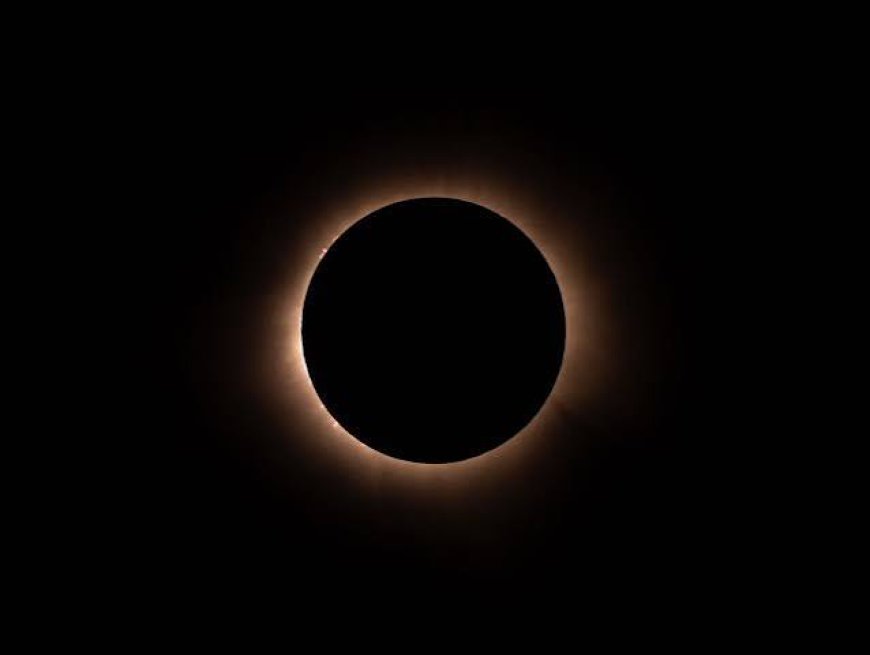
A total solar eclipse occurs when the moon passes directly between the Earth and the sun, completely blocking the sun's disc and briefly turning day into an eerie twilight along a narrow corridor known as the path of totality. Observers positioned within that path witness the sun's outer atmosphere, or corona, become visible as a glowing halo around the darkened moon — a phenomenon that is otherwise impossible to see with the naked eye.
Outside the narrow band of totality, viewers in a much broader surrounding region typically experience a partial eclipse, in which only a portion of the sun's disc appears obscured by the moon.
Where the Eclipse Can Be Seen
Preparations for today's eclipse have been underway for days, with scientific teams positioning equipment in locations along the predicted path to capture the event and study its effects. Researchers, including a team from a prominent American science museum, were seen finalising broadcast preparations in northern Spain in the days leading up to the eclipse, underscoring the international scale of the scientific and public interest surrounding the event.
While today's eclipse follows a path that does not directly cross the Arabian Peninsula, the region will not have to wait long for its own opportunity. The next total solar eclipse, expected in just under a year, is set to trace a path across southern Spain, North Africa, and directly through Saudi Arabia and Yemen — an event that is already generating early anticipation among regional astronomy communities and tourism authorities alike.
Why Total Eclipses Matter to Science
Beyond their visual spectacle, total solar eclipses offer scientists a rare opportunity to study the sun's corona in detail without the need for specialised equipment that artificially blocks the sun's glare. Researchers use these brief windows of totality, which typically last only a few minutes at any given location, to gather data on solar activity, atmospheric conditions, and the broader behaviour of the sun's outer layers.
Eclipses have historically played an outsized role in major scientific discoveries, including early confirmations of Einstein's theory of general relativity through observations of light bending around the sun during totality. Modern eclipse research continues to build on that legacy, with today's event offering another data point for ongoing solar studies.
Safety Reminders for Viewers
Astronomy and health authorities have repeated standard safety guidance ahead of today's eclipse, urging anyone attempting to view the event directly to use certified eclipse glasses or indirect viewing methods rather than looking at the sun unprotected, even during partial phases. Regular sunglasses, officials note, do not provide adequate protection against solar radiation and should never be used as a substitute for proper eclipse viewing equipment.
For those outside the visible path or unable to view the eclipse safely in person, live broadcasts from NASA and other scientific organisations are expected to provide extensive coverage throughout the day, including close-up footage of totality from within the path itself.
Looking Ahead to 2027
With today's eclipse capturing global attention, anticipation is already building for next year's total eclipse, which will mark a rare and highly significant event for the Arabian Peninsula when the path of totality passes directly over Saudi Arabia and Yemen. Regional authorities and astronomy groups are expected to begin more detailed public preparations well in advance, given the scale of interest such an event is likely to generate across the Gulf.
For now, all eyes remain on today's celestial display, as millions around the world pause to witness one of nature's most striking phenomena.