





















Global Earthquakes Renew Fears Over Middle East Seismic Risk
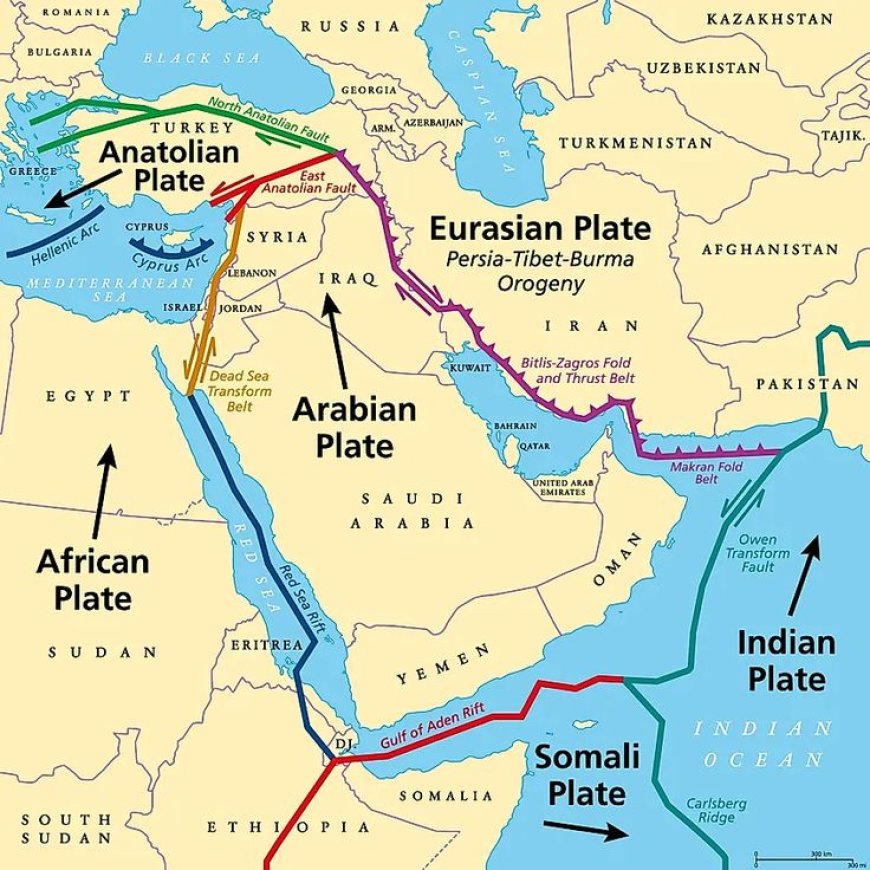
A string of deadly earthquakes worldwide is renewing scrutiny of seismic risk along the Arabian tectonic plate, from Turkiye to the Gulf of Aqaba.

A Global Wave of Earthquakes Puts Regional Risk Back in Focus
A recent run of powerful and deadly earthquakes across Colombia, Venezuela and Japan has reignited global conversations about seismic preparedness, and the Middle East is no exception. Scientists and disaster-preparedness experts across the region are once again examining the risks posed by the edges of the Arabian tectonic plate, a geological formation that stretches from Turkiye in the north down through the Gulf of Aqaba and along the Red Sea.
While the interior of the Arabian plate itself is considered geologically stable, researchers point out that its boundaries are a different story. These fault-heavy zones have historically produced significant seismic events, and recent moderate tremors felt across Egypt, Jordan and parts of Saudi Arabia have underscored that the risk, while often understated in public discussion, has not gone away.
Understanding the Region's Fault Lines
The Gulf of Suez and the wider Red Sea rift system formed millions of years ago as the Arabian plate gradually pulled away from the African plate. That ongoing process of crustal extension continues to generate periodic seismic activity along fault lines that run through Egypt's Sinai Peninsula, the Gulf of Aqaba and portions of western Saudi Arabia.
Earlier this month, a moderate earthquake struck eastern Egypt near Suez, sending tremors as far as Cairo and prompting reports of shaking felt in parts of Jordan, Israel and Saudi Arabia. Though the quake caused only minor damage, it served as a reminder of how interconnected the region's tectonic systems are, and how a moderate event in one country can be felt hundreds of kilometers away.
A Precedent From Saudi Soil
Saudi Arabia itself has direct experience with unusual seismic activity. Between April and June 2009, a lava field east of the town of Umluj known as Harrat Lunayyir experienced an extraordinary seismic swarm — more than 30,000 individual tremors, the largest reaching a magnitude of 5.7. Authorities evacuated more than 40,000 residents as a precaution at the time. No fatalities were recorded, though the episode left ground cracks and triggered landslides, and it remains a key reference point for Saudi geologists studying activity along the western edge of the Kingdom.
That event, though more than a decade and a half old now, continues to inform how Saudi authorities and researchers think about seismic monitoring in a region historically considered low-risk compared to more famously earthquake-prone zones like California, Japan or Turkiye's Anatolian fault system.
Why Global Events Trigger Regional Anxiety
The recent earthquakes that struck Colombia, Venezuela and Japan were each severe, involving significant loss of life and dramatic rescue efforts, including cases where survivors were pulled from collapsed buildings days after the initial shock. Events of that scale tend to prompt a broader reassessment of seismic risk worldwide, and the Middle East, despite its comparatively lower frequency of major quakes, is not immune to that pattern of renewed public attention.
Seismologists caution against drawing a direct causal link between unrelated earthquakes occurring on different tectonic plates thousands of kilometers apart. However, they acknowledge that periods of heightened global seismic activity often serve as a useful prompt for governments and the public to revisit preparedness measures, building codes and monitoring infrastructure.
What Experts Recommend Going Forward
Geologists studying the Arabian plate's boundary zones continue to advocate for expanded seismic monitoring networks, particularly along the Red Sea coast and near known fault systems in the Kingdom's western provinces. Improved early-warning systems and public education around earthquake safety are frequently cited as cost-effective measures that could meaningfully reduce risk, even in a region where major, destructive earthquakes remain relatively rare events.
For now, the consensus among regional seismologists is one of measured vigilance rather than alarm. The Arabian plate's core remains among the more stable tectonic regions globally, but its active margins are a reminder that geological quiet in one decade does not guarantee quiet in the next — a lesson reinforced once again by this month's wave of earthquakes on the other side of the world.
Next Article