


























Adobe's $4B AI Deal Brings Free Tools to Saudi Arabia
Adobe will offer over 27 million Saudi residents a year of free AI-powered creative tools in a $4 billion expansion of its partnership with Humain.

A Landmark Push to Democratize AI Access in the Kingdom
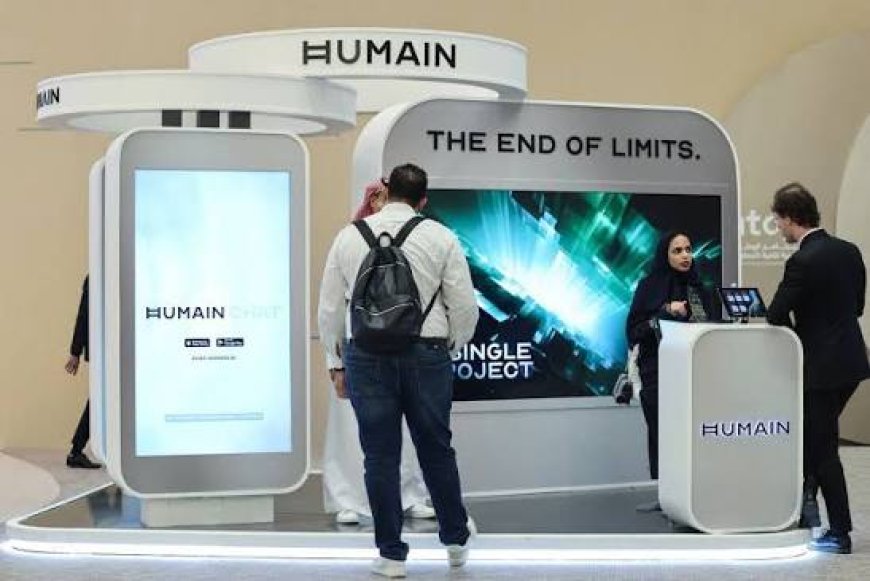
Adobe has significantly deepened its footprint in Saudi Arabia's fast-growing artificial intelligence sector, announcing an expanded partnership with the Kingdom's Ministry of Communications and Information Technology and Humain, the state-backed AI company established under Saudi Arabia's sovereign wealth fund. Under the agreement, more than 27 million eligible citizens and residents will gain a full year of free access to Adobe's AI-powered creative tools, a commitment the company values at more than $4 billion.
The offering centers on Adobe Firefly, the company's generative AI platform for image and content creation, alongside premium features from Adobe Express, its simplified design application aimed at everyday users and small businesses rather than professional creatives alone. Together, the package represents one of the most ambitious national-scale AI rollouts undertaken by a major Western technology firm in the Middle East to date.
A New AI Model Built Around Saudi Culture
Perhaps the most closely watched element of the announcement is a jointly developed image-generation model created specifically for the Saudi market. Built through a collaboration between Adobe's engineering teams and Humain, the tool is designed to produce what the companies describe as culturally aligned visual content using Arabic-language prompts, allowing users to generate imagery that reflects local aesthetics, context, and sensitivities rather than relying on generic outputs trained primarily on Western datasets.
This localization effort reflects a broader trend across the region, where governments and technology companies alike have grown increasingly focused on ensuring AI systems are trained to understand Arabic language nuances and Gulf cultural context, rather than importing tools designed primarily for English-speaking markets. Industry observers say the ability to generate contextually appropriate Arabic content has become a genuine competitive differentiator as generative AI adoption accelerates across the Gulf.
Part of a Broader Partnership With Humain
Monday's announcement builds on a partnership Adobe and Humain first revealed several months ago, aimed at accelerating the development of Arabic-language content generation tools for the wider Middle East region. Humain, backed by Saudi Arabia's Public Investment Fund, has emerged as a central pillar of the Kingdom's strategy to position itself as a regional hub for artificial intelligence development, training, and deployment, an ambition closely tied to the technology pillars of Vision 2030.
The free-access rollout is expected to begin before the end of 2026, according to Adobe, giving the company a substantial and immediate user base in a market where AI adoption has been rising quickly among both consumers and enterprises. For Adobe, the deal also carries clear commercial logic. The design software industry has grown increasingly competitive in recent years, with a wave of nimble AI-native startups chipping away at the market share long held by established players. Securing tens of millions of new users in a high-growth economy like Saudi Arabia's offers Adobe a meaningful opportunity to strengthen its position in the generative AI race.
Aligning With Saudi Arabia's Technology Ambitions
The announcement came during LEAP, Saudi Arabia's flagship technology conference held in Riyadh, an event that has become one of the region's most prominent showcases for AI, cloud computing, and digital infrastructure investment. Saudi officials have used the platform in recent years to unveil a steady stream of major technology partnerships, underscoring the Kingdom's ambition to diversify its economy away from oil dependence and toward knowledge-based industries.
Saudi Arabia's Ministry of Communications and Information Technology has previously indicated that technology investment commitments unveiled at LEAP have exceeded $15 billion this year alone, spanning cloud infrastructure, AI training capacity, and digital skills initiatives. The Adobe-Humain deal adds another significant data point to that broader narrative, reinforcing the Kingdom's positioning as a serious contender in the global AI landscape rather than merely a consumer market for foreign technology.
What It Means for Everyday Users
For ordinary Saudi residents, the practical impact of the deal could be considerable. Small business owners, students, content creators, and marketing professionals will gain access to premium design and content-generation tools that would otherwise carry substantial subscription costs, potentially lowering barriers to entry for entrepreneurship and digital content creation across the country. Analysts suggest the move could also accelerate demand for AI literacy training and digital skills programs, as more residents gain hands-on exposure to generative tools in their daily work and creative projects.
As the rollout approaches in the coming months, attention will turn to how effectively the new culturally tuned AI model performs in practice, and whether it can meaningfully differentiate itself from the growing number of AI tools now competing for users across the Gulf's rapidly expanding digital economy.