




















Hormuz Tensions Threaten Saudi Oil Exports Anew
As the US threatens fresh sanctions and Iran warns ships in the Strait of Hormuz, Saudi Arabia leans on pipeline capacity to protect oil exports.

Hormuz Standoff Escalates as Washington Threatens New Sanctions
Tensions over the Strait of Hormuz sharpened further on Monday after the United States warned of an "economic D-Day" ahead of expected new sanctions on Iran, even as Tehran cautioned commercial vessels that violating its transit rules through the strait could result in fines or detention.
The exchange marks the latest flashpoint in a standoff that has gripped Gulf shipping lanes since the US and Israel launched airstrikes on Iranian targets on February 28, a campaign that prompted Tehran to effectively restrict passage through the strait it controls on its northern side.
Why a Narrow Waterway Matters to the Whole World
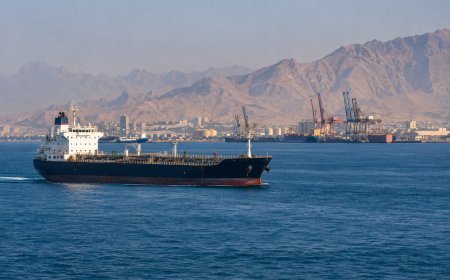
The Strait of Hormuz is not just another shipping lane. In peacetime, roughly 20 million barrels of oil pass through it daily — close to a fifth of global oil consumption — alongside about a fifth of the world's traded liquefied natural gas, most of it originating in Qatar. Analysts widely regard it as the single most consequential oil chokepoint on the planet, precisely because so few alternative routes exist for producers on its western shore.
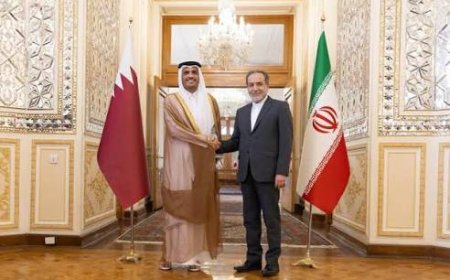
Data reviewed over the weekend showed just how constrained traffic has become: fewer than 20 ships transited the strait over a recent two-day stretch, a fraction of pre-war volumes. Diplomacy has continued alongside the disruption. Oman's top diplomat is due in Tehran on Tuesday specifically to discuss the situation in the strait, a sign that regional mediators are still searching for ways to de-escalate even as rhetoric between Washington and Tehran hardens.
Saudi Arabia's Pipeline Hedge
For Saudi Arabia, historically the largest single exporter of crude through Hormuz, the standoff has accelerated a strategy that was already underway before the current crisis: routing more oil overland rather than through the strait.
The Kingdom's East-West Crude Pipeline, commonly known as Petroline, carries crude from the Abqaiq processing hub to Yanbu on the Red Sea coast, sidestepping Hormuz entirely. Saudi Aramco reported last year that it had lifted the system's design capacity to as much as 7 million barrels per day, though sustained flows at that level have not yet been tested. Industry estimates suggest around 2 million barrels per day are currently moving through the pipeline, leaving an estimated 3 to 5 million barrels per day of spare capacity that could be activated if Hormuz shipments were further curtailed.
Saudi Arabia is far from alone in this pivot. The United Arab Emirates is working to double its own pipeline capacity to the Port of Fujairah on the Gulf of Oman, and analysts at Goldman Sachs have tracked seven such pipeline projects across the Middle East that are either under construction or in planning. Combined, they estimate these routes could eventually carry more than 14 million barrels per day by the end of 2028 — equivalent to over 60 percent of the Gulf states' pre-war export volume.
A Hedge, Not a Solution
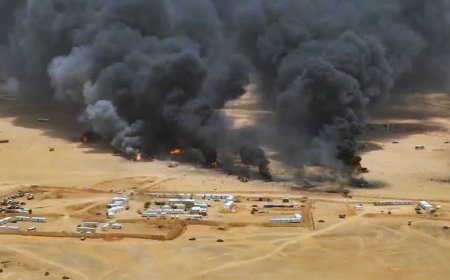
Energy analysts are careful to note that pipelines mitigate risk rather than eliminate it. Onshore infrastructure, while safer from naval interdiction, remains vulnerable to the kind of asymmetric drone and missile strikes that have already targeted refineries and export terminals during the conflict. Rystad Energy geopolitical analyst Jennifer Li has described the pipeline build-out as more of a geopolitical hedge than a full replacement for Hormuz capacity, while maritime intelligence analysts stress that Red Sea terminals such as Yanbu have become disproportionately important to keeping Gulf barrels flowing to global markets.
Market Impact Still Being Felt
The price consequences of the standoff have already reshaped global energy markets. Brent crude, trading around  119 during the most intense phase of the conflict. On Monday, prices stood near $93 a barrel — elevated compared with pre-war levels but well off the peak, reflecting both the partial success of pipeline rerouting and continued uncertainty over how the standoff will resolve.
Washington's latest warning of an "economic D-Day," widely interpreted as signaling a tougher new round of sanctions targeting Iranian oil revenue, raises the stakes further. Should Tehran make good on threats to halt oil exports altogether or escalate interference with shipping, traders expect renewed upward pressure on prices, even with the additional pipeline capacity Gulf states have brought online.
For now, Saudi Arabia and its neighbors are pursuing a dual-track approach: supporting regional diplomatic efforts, such as Oman's shuttle diplomacy with Tehran, while continuing to invest in infrastructure that reduces their dependence on a waterway that has proven, this year more than most, just how fragile global energy security can be.
Next Article