























Saudi Date Exports Hit Record $533 Million in 2026
Saudi date exports have climbed nearly 60% in five years, reaching close to $533 million as Kingdom dates now reach over 125 countries worldwide.

While much of the conversation around Saudi Arabia's economic transformation tends to center on oil, tourism and artificial intelligence, a quieter but no less remarkable success story has been unfolding in the Kingdom's date palm groves. Fresh figures released this week show that Saudi date exports have climbed to nearly $533 million, a milestone that reflects years of sustained investment in one of the country's oldest agricultural traditions.
The data, tied to the ongoing Buraidah International Dates Carnival in the Qassim region, was compiled by the National Center for Palms and Dates and paints a picture of an industry quietly outperforming expectations. According to the figures, the Kingdom's date exports were valued at roughly SR1.938 billion, or about $516.80 million, in 2025 alone — a 14.3 percent increase compared with the previous year.
Five Years of Steady Growth
Perhaps more striking than the year-on-year figure is the five-year trend. Export value has climbed 59.5 percent since 2021, rising from SR1.215 billion to nearly SR2 billion, or approximately $533 million, in 2025. That kind of sustained, compounding growth suggests the sector is not experiencing a short-term spike but rather a structural shift in how Saudi dates are being marketed, packaged and distributed internationally.
Officials point to an expanding footprint of importing nations as one of the key drivers behind the growth. Saudi dates are now reaching more than 125 countries around the world, a dramatic broadening of the export base that has helped insulate the sector from demand fluctuations in any single market. Where Saudi dates were once concentrated in traditional Gulf and Levantine markets, the fruit is increasingly finding shelf space in Europe, North America, and parts of Asia and Africa.
The Buraidah Carnival as an Economic Engine
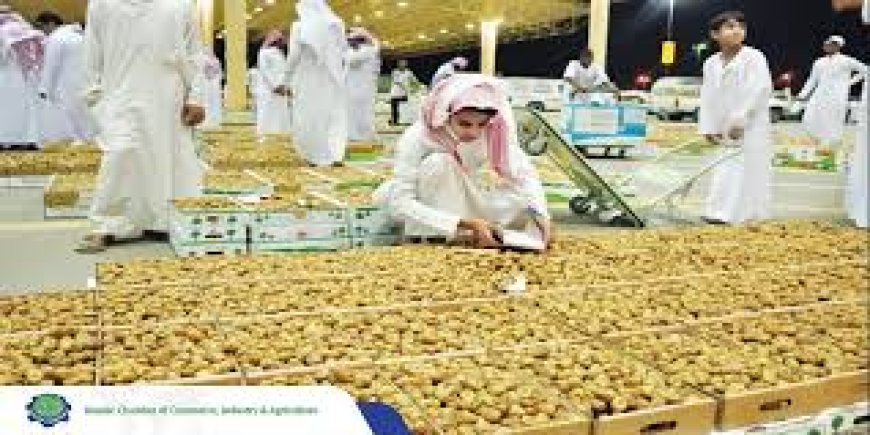
The timing of the announcement, coinciding with the Buraidah International Dates Carnival, is no coincidence. The annual event has grown into one of the most significant commercial gatherings in the Qassim region, drawing traders, exporters and buyers from across the world to sample and negotiate deals on dozens of date varieties native to Saudi soil. Earlier reporting on this year's carnival noted that sales during just the first fifteen days of the event topped $26 million, a sign of the commercial intensity the gathering generates each season.
Qassim, often described as the historic heartland of Saudi date cultivation, showcases an unusually rich diversity of cultivars at the carnival, from the prized Ajwa and Sukkari varieties to lesser-known regional types that are only now gaining international recognition. That diversity has become a selling point in itself, allowing Saudi exporters to differentiate their product in a global dried and fresh fruit market that is becoming increasingly competitive.
A Pillar of Non-Oil Diversification
The date sector's growth fits neatly into the Kingdom's broader Vision 2030 objectives, which call for reducing reliance on oil revenue and building up non-oil export industries capable of generating sustainable foreign currency inflows. Agriculture has historically played a modest role in that diversification story compared to sectors like tourism, entertainment and finance, but the date industry's performance suggests it deserves a more prominent place in the national economic narrative.
Saudi Arabia possesses one of the largest date palm populations in the world, with millions of trees cultivated across regions including Qassim, Madinah, Al-Ahsa and Riyadh. Government support programs in recent years have focused on modernizing irrigation techniques, improving post-harvest processing and packaging standards, and helping smaller producers access export markets that were previously out of reach without significant capital or logistics expertise.
Looking Ahead
Industry watchers say the growth trajectory shown in the latest figures is likely to continue, provided the Kingdom keeps investing in quality control, cold-chain logistics and international marketing campaigns that position Saudi dates as a premium product rather than a commodity. With more than 125 countries already importing the fruit and export values nearly 60 percent higher than five years ago, the humble date is proving to be one of the more understated success stories of Saudi Arabia's economic diversification push — one rooted, quite literally, in centuries of agricultural heritage.