





















Aramco and Ma'aden Launch Saudi Arabia's Copper Search
Aramco and Ma'aden have signed a deal to explore nearly 10% of Saudi Arabia for copper and critical minerals, a major step in the Kingdom's economic diversification push.

Saudi Arabia has taken a major step toward becoming a serious player in global critical minerals, with energy giant Aramco and mining company Ma'aden signing a shareholders' agreement to jointly explore nearly a tenth of the Kingdom's entire landmass for copper and other minerals essential to the energy transition.
Under the agreement, the new joint venture will be majority-owned by Ma'aden, which will hold a 51 percent stake, with Aramco taking the remaining 49 percent. The deal, first disclosed in principle back in January 2025, moves the partnership from concept to formal structure, though it still requires corporate, regulatory and antitrust approvals before becoming fully operational.
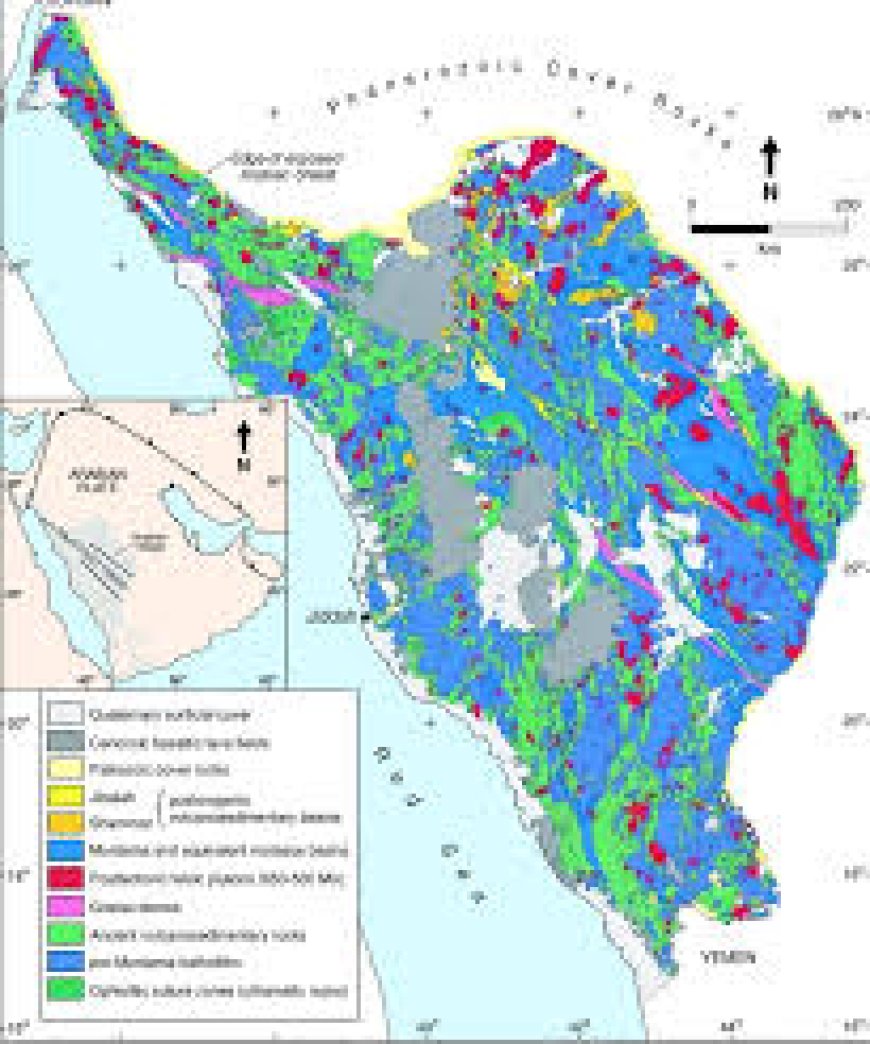
The venture's exploration area is enormous by any standard: roughly 182,000 square kilometers within what geologists call Zone-4, or the Transition Zone, a corridor running parallel to the Arabian Shield — a geological formation that underlies the western third of Saudi Arabia and is believed to hold substantial deposits of copper, gold, silver, zinc, lead and rare earth elements.
Combining oil-industry data with mining expertise
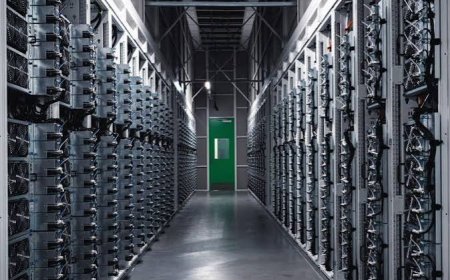
What sets the partnership apart from a conventional mining venture is the way it fuses Aramco's decades of subsurface geological and geophysical data, originally gathered for oil and gas exploration, with Ma'aden's operational experience in mineral extraction. The companies say they intend to apply advanced computational algorithms, artificial intelligence and high-performance computing to analyze that data and identify the most promising sites for copper deposits far faster than traditional exploration methods would allow, compressing the journey from regional screening to physical discovery.
Copper sits at the heart of the venture's ambitions. The metal is central to the global buildout of electric vehicles, renewable power infrastructure, energy storage systems and electricity grids, and currently represents more than a fifth of the roughly  250 billion today, could grow to more than $400 billion by 2035 as demand from clean energy and electrification accelerates worldwide.
A cornerstone of Vision 2030's mining ambitions
The exploration push fits squarely within Saudi Arabia's broader Vision 2030 strategy to diversify its economy beyond oil. The Kingdom has put the value of its untapped mineral wealth at more than SR9.3 trillion, equivalent to roughly $2.5 trillion, and has set a target for mining to eventually contribute SR240 billion to gross domestic product. Officials view the sector as one of the most promising avenues for building new industrial capacity and export revenue that does not depend on hydrocarbons.
The Aramco-Ma'aden partnership is not happening in isolation. It comes alongside a broader wave of investment activity across Saudi Arabia's industrial and infrastructure base this year, including a large financing package the Public Investment Fund has assembled with international export-credit and development institutions to support mining and industrial expansion, as well as a surge of interest from foreign contractors competing for a project pipeline worth trillions of riyals across the Kingdom's construction sector.
What comes next
For now, the joint venture remains in its early, pre-approval stage, and any copper discoveries are still likely years away from producing extractable ore at commercial scale. Mineral exploration of this magnitude typically unfolds over a long timeline, moving from geological modeling and target definition through drilling, resource verification and, eventually, mine development — a process that can take the better part of a decade even under favorable conditions.
Even so, the scale of the ambition is unmistakable. By pairing one of the world's most data-rich energy companies with one of the Middle East's fastest-growing mining operators, Saudi Arabia is signaling that it intends to compete seriously for a share of the global critical minerals supply chain — an industry increasingly viewed as strategically important given rising geopolitical competition over the raw materials needed for the clean energy transition.
If the exploration effort delivers on its early promise, the Transition Zone could ultimately emerge as one of the more significant new copper frontiers globally, reinforcing Saudi Arabia's broader push to build an economy that extends well beyond its traditional oil and gas foundations.