





















Oil Prices Rise on Trump's Iran Sanctions Threat
Brent and WTI crude rose Friday after Trump threatened fresh sanctions on Iran's trading partners, tightening an already strained Gulf oil supply outlook.

Oil Prices Climb as Trump's Sanctions Threat Rattles Global Markets
Crude oil markets closed out the week on a firmly upward note, as traders reacted to US President Donald Trump's latest warning that Washington could impose sweeping new sanctions on countries and companies still doing business with Iran. The threat added fresh urgency to an oil market that has already been on edge for months amid disrupted shipping through one of the world's most critical energy corridors.
International benchmark Brent crude settled just above  87. Both benchmarks are now trading at levels not seen since late July, and both have logged gains of more than five percent over the course of the week alone.
Trump's warning adds fuel to an already tight market
The latest spike comes at a delicate moment. A previous ceasefire-style arrangement between Washington and Tehran lapsed earlier this week without either side making a serious push to revive negotiations. In the vacuum left behind, Iranian officials said any new American sanctions would be met with a "devastating" response, while the Trump administration has signalled it intends to pursue the harshest financial penalties in its history in an effort to squeeze Tehran economically.
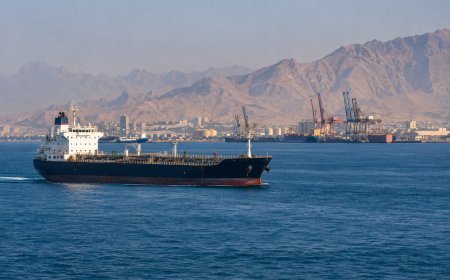
Market analysts say the practical effect of new sanctions may be limited in the short term, given that Iranian exports are already heavily constrained by an ongoing US naval blockade. But the psychological and logistical impact could be more significant. Any escalation in shipping incidents, insurance costs, or retaliatory measures threatens to further choke traffic through the Strait of Hormuz, the narrow waterway between Iran and the Arabian Peninsula through which roughly a fifth of the world's oil and liquefied natural gas once passed before the current conflict began.
Hormuz traffic remains a fraction of normal levels
Shipping data illustrates just how dramatically trade through the strait has been curtailed. Ship-tracking figures show that only a handful of commodity vessels crossed the Strait of Hormuz on Thursday — roughly half the number that passed through just a day earlier. Before US-Israeli military action against Iran began in late February, the strait was one of the busiest energy corridors on the planet. Nearly six months into the conflict, it remains a bottleneck that continues to unsettle markets far beyond the region.
Saudi Arabia, Iraq, the United Arab Emirates and Kuwait — the Gulf's largest oil producers — have all seen their supply chains affected by the broader disruption, even though most of the fighting has centred on Iran and Israel rather than the Gulf states themselves. That regional exposure has kept a persistent risk premium baked into oil prices throughout the summer.
Markets look for workarounds as pressure builds
Not every analyst believes the crisis at Hormuz tells the whole story. Some energy watchers point out that alternative supply routes and sources are increasingly filling the gap left by constrained Gulf shipments. Pipeline capacity, so-called "shuttle" tanker operations, a resurgent US shale sector, a slowly recovering Venezuelan output, and largely unconstrained exports from the UAE are all adding barrels to the global market, even as the headline story remains centred on the Strait of Hormuz.
Still, the direction of travel this week has clearly been upward. Offers of Iranian crude to Chinese buyers — long a key outlet for Tehran's oil exports despite sanctions — have reportedly declined in recent days, according to trade sources, as the tightening US blockade makes it harder for Iran to move its cargoes. With Washington now threatening to go after the buyers themselves, some Chinese refiners may grow more cautious about touching Iranian barrels altogether.
A conflict with no clear resolution in sight
The broader war between the US, Israel and Iran, now approaching the six-month mark, shows little sign of a diplomatic breakthrough. Iran's leadership has publicly framed itself as negotiating from a position of strength, while Washington continues to apply economic and military pressure in parallel. For energy markets, that means continued volatility is likely to remain the baseline expectation rather than the exception.
For Gulf economies, including Saudi Arabia, higher oil prices carry a mixed message. Elevated crude prices support government revenues at a time when the Kingdom is investing heavily in Vision 2030 diversification projects. But sustained instability in regional shipping lanes also carries risks for insurance costs, trade flows and investor sentiment across the wider region. As the week draws to a close, traders and policymakers alike will be watching closely for any sign of whether Washington's sanctions threat is a negotiating tactic — or the opening move in a fresh economic escalation.
Next Article