























Saudi Arabia Hands COP17 Presidency to Mongolia
Saudi Arabia concludes its UNCCD presidency at COP17 in Mongolia, showcasing a $12 billion drought resilience legacy from its record-breaking COP16 in Riyadh.

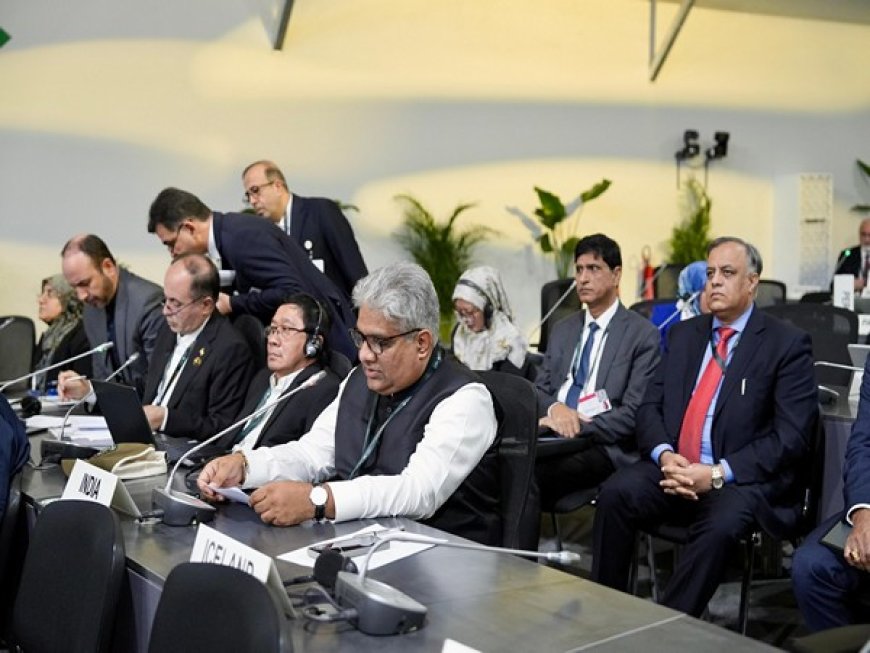
Saudi Arabia Closes Out UNCCD Presidency With Report on $12 Billion Drought Legacy
Saudi Arabia is preparing to hand over the presidency of the United Nations Convention to Combat Desertification to Mongolia, bringing to a close a two-year term that began with the largest gathering in the convention's history and is now culminating at a summit in one of the world's most drought-affected nations.
The handover will take place at the 17th Conference of the Parties, known as COP17, running from August 17 to 28 in the Mongolian capital, Ulaanbaatar, under the banner "Restoring Land, Restoring Hope." The summit is expected to draw around 10,000 government negotiators, scientists, campaigners and journalists from across the convention's 197 parties, arriving at a moment when drought and land degradation have climbed rapidly up the global agenda.
A Record-Breaking Riyadh Legacy
Saudi Arabia's presidency traces back to its hosting of COP16 in Riyadh in December 2024, a summit that brought together all 197 parties to the convention and produced 39 separate decisions aimed at tackling land degradation worldwide. That gathering also mobilized roughly $12 billion in pledges, largely from Gulf-based development finance institutions, to support drought resilience and land restoration efforts in vulnerable countries.
Central to that legacy is the Riyadh Global Drought Resilience Partnership, an initiative launched at COP16 specifically to help around 80 of the world's poorest nations cope with worsening drought conditions. As it hands over the reins in Mongolia, Saudi Arabia is expected to report on how much of that $12 billion has actually reached the ground, and to convene the inaugural assembly of the partnership's steering body alongside a second meeting of its broader steering committee — the culmination of preparatory talks held over the past year in Panama, Bonn, Cairo and Nairobi.
A Pavilion and a Parting Chair
Ahead of the formal handover, Saudi Arabia will chair the final meeting of the COP Bureau, the body responsible for overseeing the convention's proceedings between sessions. The Kingdom will also operate a national pavilion inside the summit's Blue Zone, hosting more than 40 side events alongside a dedicated space for its Middle East Green Initiative, one of the flagship environmental programs unveiled under the country's Vision 2030 diversification strategy.
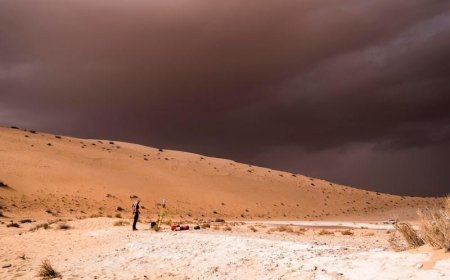
The choice of Mongolia as the next host carries its own symbolism. With roughly 77 percent of its land already degraded, according to UN figures, Mongolia is among the countries most acutely affected by desertification, and this year's summit falls during the UN's International Year of Rangelands and Pastoralists, a designation Mongolia itself championed at the General Assembly. COP17 will also be the first UNCCD summit to be led by a woman, with Mongolia's foreign minister, Battsetseg Batmunkh, taking on the presidency, and the first for the convention's newly appointed executive director, Yasmin Fouad, a former Egyptian environment minister who previously contributed to the Intergovernmental Panel on Climate Change's work on desertification.
Unfinished Business on the Table
Beyond the ceremonial handover, delegates in Ulaanbaatar will grapple with one of the more contentious items left over from previous sessions: whether to pursue a legally binding international protocol on drought. African nations have pushed for such a mechanism for several summits running, arguing that a binding framework is needed to unlock consistent, predictable funding. The United States, several European governments and others have resisted the idea, contending that negotiating an entirely new protocol would be costly and time-consuming, favoring instead an expansion of existing voluntary mechanisms.
Observers also expect governments to weigh in on Mongolia's own signature initiative, a rangelands-focused investment program designed to attract funding for projects that restore degraded pastureland, an issue with direct relevance to the herding communities that make up a significant share of the host country's population.
A Continuing Role for Riyadh
Although its formal presidency is ending, Saudi Arabia is expected to remain an influential voice within the convention's work going forward. The Kingdom has committed financial support to what organizers are calling the Riyadh-Ulaanbaatar action agenda, a mechanism intended to carry forward the initiatives launched two years ago even as leadership passes to Mongolia. For a country sometimes criticized for its posture at broader climate negotiations, its outsized role in desertification diplomacy reflects a more straightforward calculation: as an arid nation increasingly investing in land restoration and water security, Saudi Arabia has a direct stake in seeing the convention's goals actually delivered, not just declared.